This awesome map, using imagery taken by NASA’s Lunar Reconnaissance Orbiter (LRO), enables us to explore Moon within our browsers.
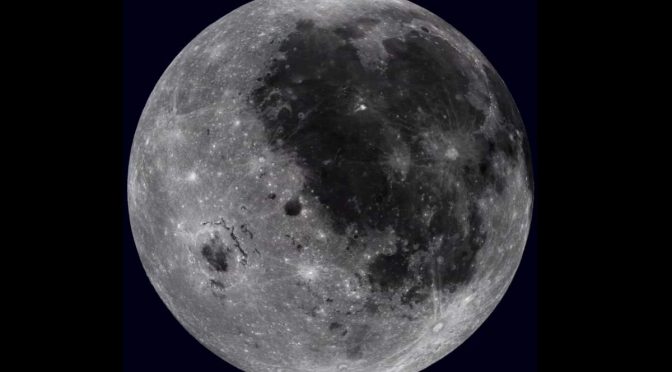
This awesome map, using imagery taken by NASA’s Lunar Reconnaissance Orbiter (LRO), enables us to explore Moon within our browsers.

All stars emit varying amounts of light over time – and the Sun is no exception. Such changes in starlight can help us understand how habitable any planets around other stars are – a very active star may bombard its planets with harmful radiation. Now a new study, published in Science, shows that the Sun is significantly less active than other, similar stars.
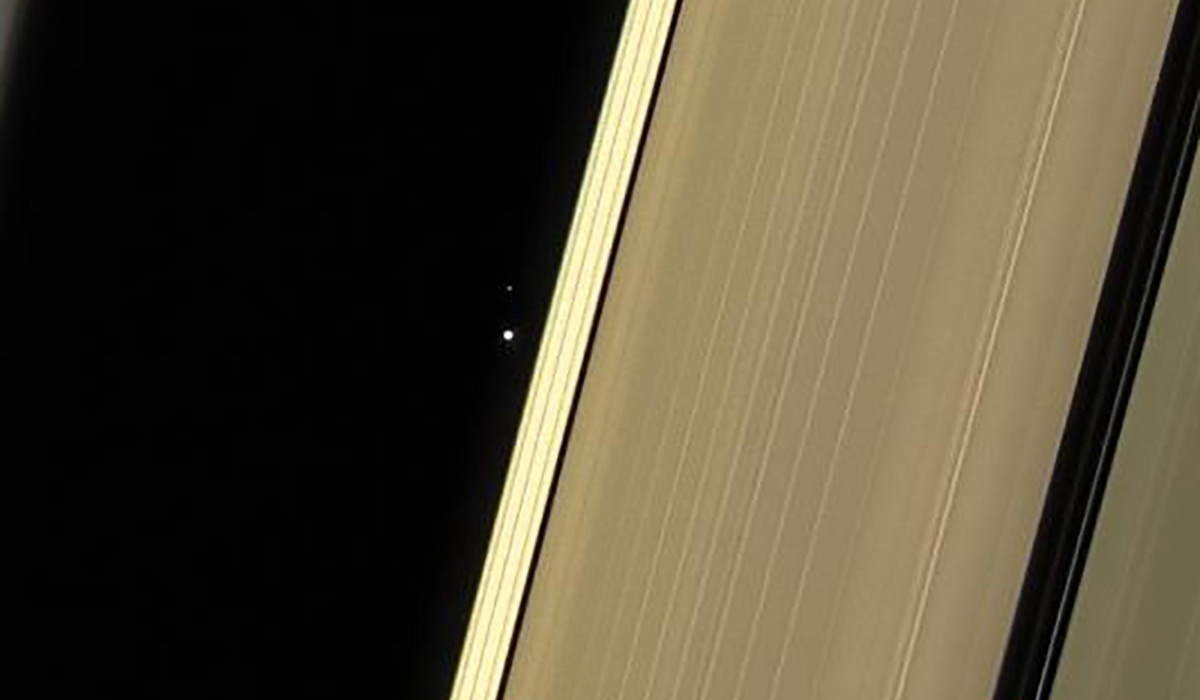
A very beautiful photo of Earth and Moon as seen through Saturn’s rings – an image taken by NASA’s Cassini spacecraft on April 13, 2017.

Astrophotographer Andrew McCarthy created a spectacular image of the Moon’s surface in great detail by combining 100,000 long-exposure photos.

Scientists have found the oldest material on Earth in a 7 billion-year-old meteorite – a space rock that is way older than the Earth and even older than our solar system! For comparison, the age of Earth is approximately 4.54 billion years, with an error range of about 50 million years. The Sun is about 4.6 billion years old.

NASA Goddard Planetary Scientist Dr. James O’Donoghue (@physicsJ) created another beautiful video showing the relative rotation speeds of Solar System planets.

You can download and print NASA’s “Solar System and Beyond” Poster Set for free. The posters are best printed on 11”x17” paper.

On October 12, 2019, the NASA/ESA Hubble Space Telescope provided astronomers with their best look yet at the first confirmed interstellar comet – the 2I/Borisov (originally designated C/2019 Q4).

Did you know that the Moon and space itself have a smell? Space has a lot of surprises. Here are the 10 lesser-known space facts.

Today, on average, the Moon is 384,400 km (238,000 miles) away from the Earth. But that was not always the case. Our satellite was much closer in the past. Now, Dr. James O’Donoghue (@physicsJ on Twitter) created the animation below showing the ancient distances and apparent size of the Moon.
The animation also includes the current distance and apparent size of the moon in the Earth’s sky.