Categories
Life on Earth Astronomy

51 Pegasi b: The First Exoplanet to be Discovered Orbiting a Sun-Like Star

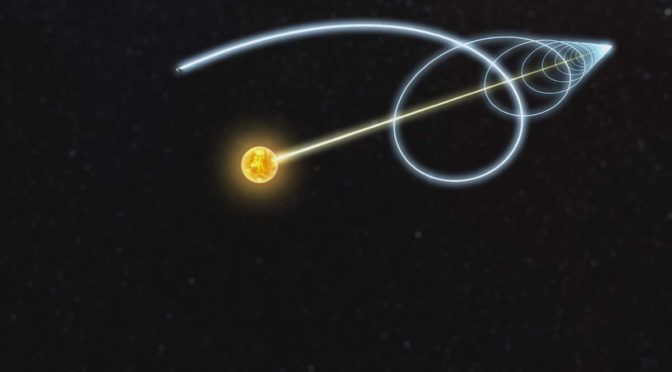
51 Pegasi b, discovered in 1995, marked a pivotal moment in astronomy, being the first exoplanet confirmed to orbit a Sun-like star. Located approximately 50 light-years away in the constellation Pegasus, this gas giant revolutionized our understanding of planetary systems. Unlike the gas giants in our solar system, 51 Pegasi b orbits remarkably close to its star, completing a full orbit in just over 4 days. This proximity results in extreme temperatures, making it a ‘hot Jupiter’. Its discovery, led by Michel Mayor and Didier Queloz, challenged existing theories about planet formation and prompted a reevaluation of our place in the cosmos.

Categories
Life on Earth Animals Climate Prehistoric

Here’s how the darkness and cold killed the dinosaurs 66 million years ago

The catastrophic event that ended the reign of the dinosaurs 66 million years ago has been a subject of fascination and research for decades. A groundbreaking study by the Potsdam Institute for Climate Impact Research, detailed in their 2017 article “Baby, it’s cold outside: Climate model simulations of the effects of the asteroid impact at the end of the Cretaceous,” offers a compelling computer simulation of the aftermath of the Chicxulub asteroid impact.

This simulation reveals how prolonged darkness and severe cold, triggered by sulfuric acid droplets blocking sunlight, led to a dramatic global temperature drop and significant ecological shifts, ultimately contributing to the mass extinction of the non-avian dinosaurs and other species. This research not only illustrates the direct consequences of the asteroid impact but also provides insights into the complex climatic and environmental changes that followed, marking a pivotal moment in Earth’s history.

Baby, It’s Cold Outside: How the Darkness and Cold Killed the Dinosaurs

Scientists created a computer simulation of how the afterward effects of the famous Chicxulub asteroid (estimated to be 10 km/6.2 miles wide) killed the non-avian dinosaurs (and also a wide range of other species). According to a new study, after the devastating impact, the darkness and cold killed the dinosaurs 66 million years ago.

On January 13, 2017, an article titled “Baby, it’s cold outside: Climate model simulations of the effects of the asteroid impact at the end of the Cretaceous”, published by the Climate Scientists of Potsdam Institute for Climate Impact Research (PIK), revealed a detailed model of what happened to the atmosphere and the climate after the Chicxulub impact.

Categories
Animals Life on Earth

Crocodile carries her hatchlings to the water [close-up video footage]

The video below offers an extraordinary glimpse into the rarely-seen world of Nile crocodiles. As a female crocodile named Ganda tenderly transports her newborn babies to the water, we witness a moment of surprising gentleness from a creature often only associated with ferocity. This intimate footage was made possible by innovative research techniques: days before the hatching, scientists strategically placed a robot baby crocodile equipped with cameras where its eyes used to be, ingeniously designed to resemble crocodile hatchlings, near Ganda’s eggs.

That robotic imitator captured this heartwarming event, providing a unique perspective on the nurturing behavior of one of nature’s most formidable predators. This video not only showcases the maternal instincts of the Nile crocodile but also demonstrates the ingenious methods researchers use to study wildlife.

Categories
Earth from Space Mars Planet Earth Space Exploration

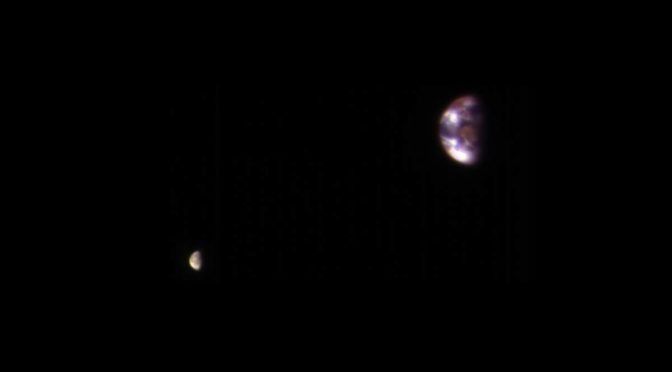
Photo of Earth and Moon from Mars

NASA published an amazing image of Earth (and the Moon) from Mars, taken on November 20, 2016, by the High-Resolution Imaging Science Experiment (HiRISE) camera on NASA’s Mars Reconnaissance Orbiter. The image is so incredibly detailed that we can see even the continents and clouds of Earth.

Categories
Earth from Space Places Planet Earth Space Exploration

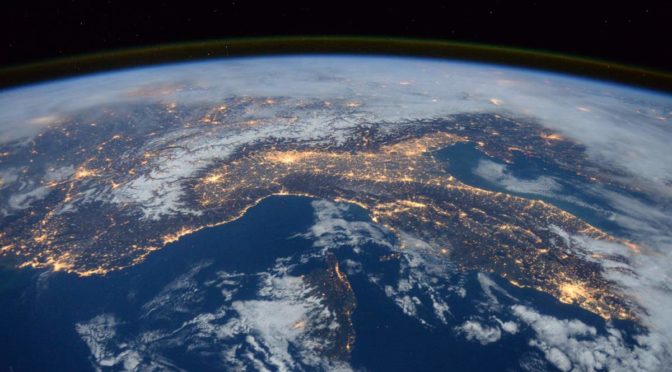
10 Most Beautiful Earth Images Taken From the International Space Station in 2016

Here are the top ten most beautiful Earth photos taken by the astronauts aboard the International Space Station (ISS) in 2016.

Categories
Life on Earth Animals People Places

What would happen if humans became extinct?

In the last few thousand years, humans have had a powerful impact on Earth. Within a geological blink of an eye, we exploded out of Africa to colonize virtually every inhabitable space on the planet. We dammed the rivers, domesticated animals, deforested many areas, changed the chemistry of the atmosphere and the seas… the list goes on. But, what would happen if humans became extinct in the future?

One may think “humans are so intelligent, so it’s very unlikely that the entire human race will be gone”. But, in fact, there is a strong chance that it will happen, and probably not in the long run!

Categories
Astronomy Planet Earth

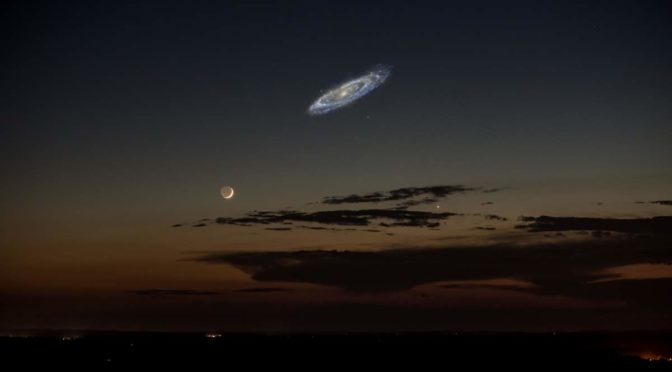
If Andromeda Galaxy were brighter, this is what we’d see

Andromeda Galaxy is the farthest object in the sky that we can see with the naked eye. But if you don’t know where to look, you won’t notice it. If it was much brighter, its appearance in the sky would be sensational. The moon is a good reference for what we’d see if our galaxy’s neighbor was much brighter in the image below:

Categories
Astronomy Planet Earth Solar System

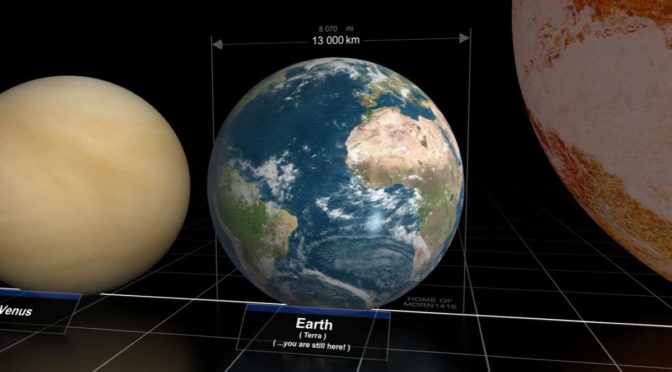
The Size Of Earth Compared to Other Planets and Stars (and the Universe)

Have you ever wondered how big is the Earth compared to other planets? Or other stars? Or even the Universe itself?

When it comes to big numbers, very big numbers, the human brain is weak. In fact, our brains cannot deal with really large numbers. That’s why when the subject is Earth, planets, Solar System, galaxies, and in general, the Universe, we cannot truly conceptualize the things. A lot of people think we’re “conquering” space (we are far, far away from that – and maybe we never will), or the “aliens” are regularly visiting Earth as if it is just an hour’s drive from there.

In fact, these people don’t truly understand what are they talking about, how big is the universe, how far even the nearest stars are, and how the Earth is a tiny, tiny spot in a vast space we are still striving to understand.

Categories
Solar System Astronomy Physics Planet Earth

How Earth Moves [Video]

A beautiful video, once again, from Michael Stevens, titled “How Earth Moves”. Michael explains many concepts, including “sub-solar point”, “sidereal day vs solar day”, or “how Earth moves in space” etc, and he is doing it in