Categories
Mars Astrobiology Space Exploration

Subglacial lakes on Mars: an oasis for life?

Back in 2018, using the onboard radar instrument MARSIS (Mars Advanced Radar for Subsurface and Ionosphere Sounding), European Space Agency’s Mars Express orbiter discovered an underground reservoir that is buried about 1.5 km (0.93 mi) under the ice. Now, in September 2020, scientists analyzing Mars Express data have discovered three more subglacial lakes on Mars or pools of liquid water buried under the ice in the south polar region of the red planet. Could they be an oasis for microbial life?

Categories
Space Exploration

Space Shuttle, Boeing 747, and Concorde in the same photo

Washington Dulles International Airport has shared a strikingly beautiful throwback photo on their Twitter account (@Dulles_Airport): The year 1986, the Space Shuttle Enterprise on top of a Boeing 747, while a Concorde was taking off in the background. A photo that can never be replicated. Total aviation and space exploration greatness.

Categories
Space Exploration Technology

6 Auto Innovations Driven by NASA research

A common question people ask is, “Why does NASA spend billions on space exploration when there are so many problems here on Earth?” While this concern is understandable, it overlooks an important fact: NASA’s research and technological advancements often lead to innovations that benefit life on Earth, with the automotive industry being a prime example.

Categories
Space Exploration

Alexei Leonov, the first spacewalker was also a painter

Soviet and Russian cosmonaut Alexei Leonov (30 May 1934 – 11 October 2019), the first human to walk in space was also a painter.

Categories
Moon Landing Space Exploration This Day in Science, Technology, Astronomy, and Space Exploration History

Complete descent and landing of Apollo 11 [July 20, 1969]

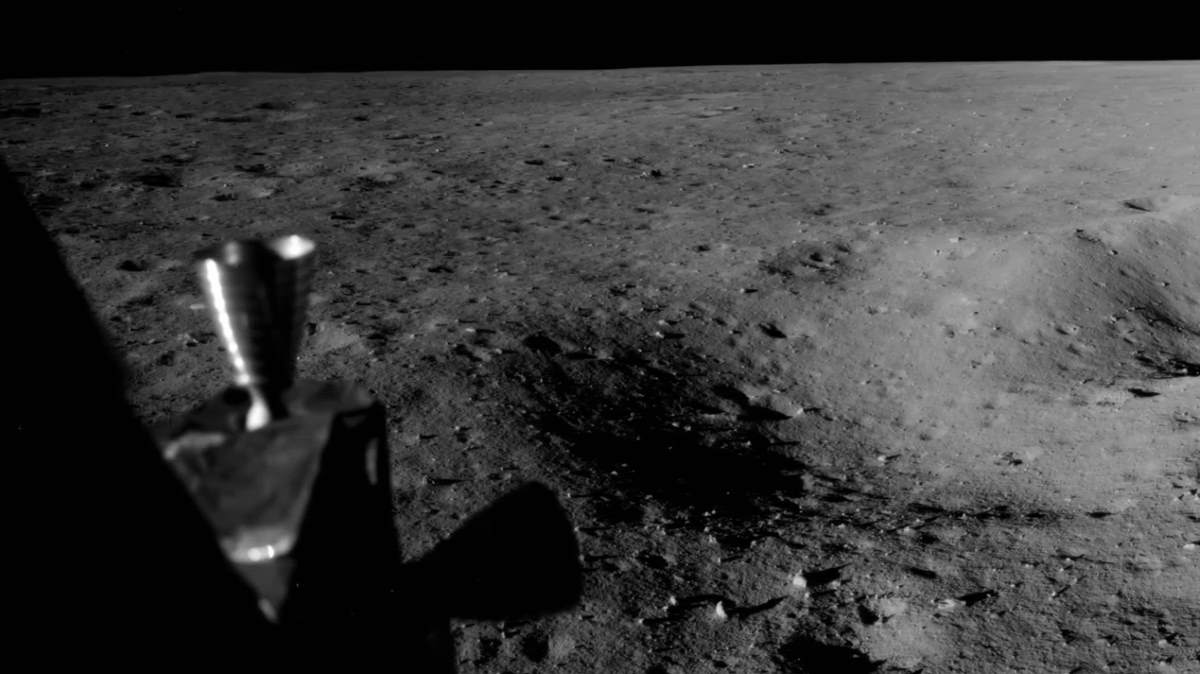
Apollo Flight Journal channel published a detailed video that shows every second of the complete descent and landing of Apollo 11, the spaceflight that first landed humans on the Moon on July 20, 1969. The video combines data from the onboard computer for altitude and pitch angle (you can see both altitude and pitch angle every second), 16mm film that was shot throughout the descent at 6 frames per second.

Categories
Earth from Space Space Exploration

Comet-Rise, the rise of Comet NEOWISE from the ISS

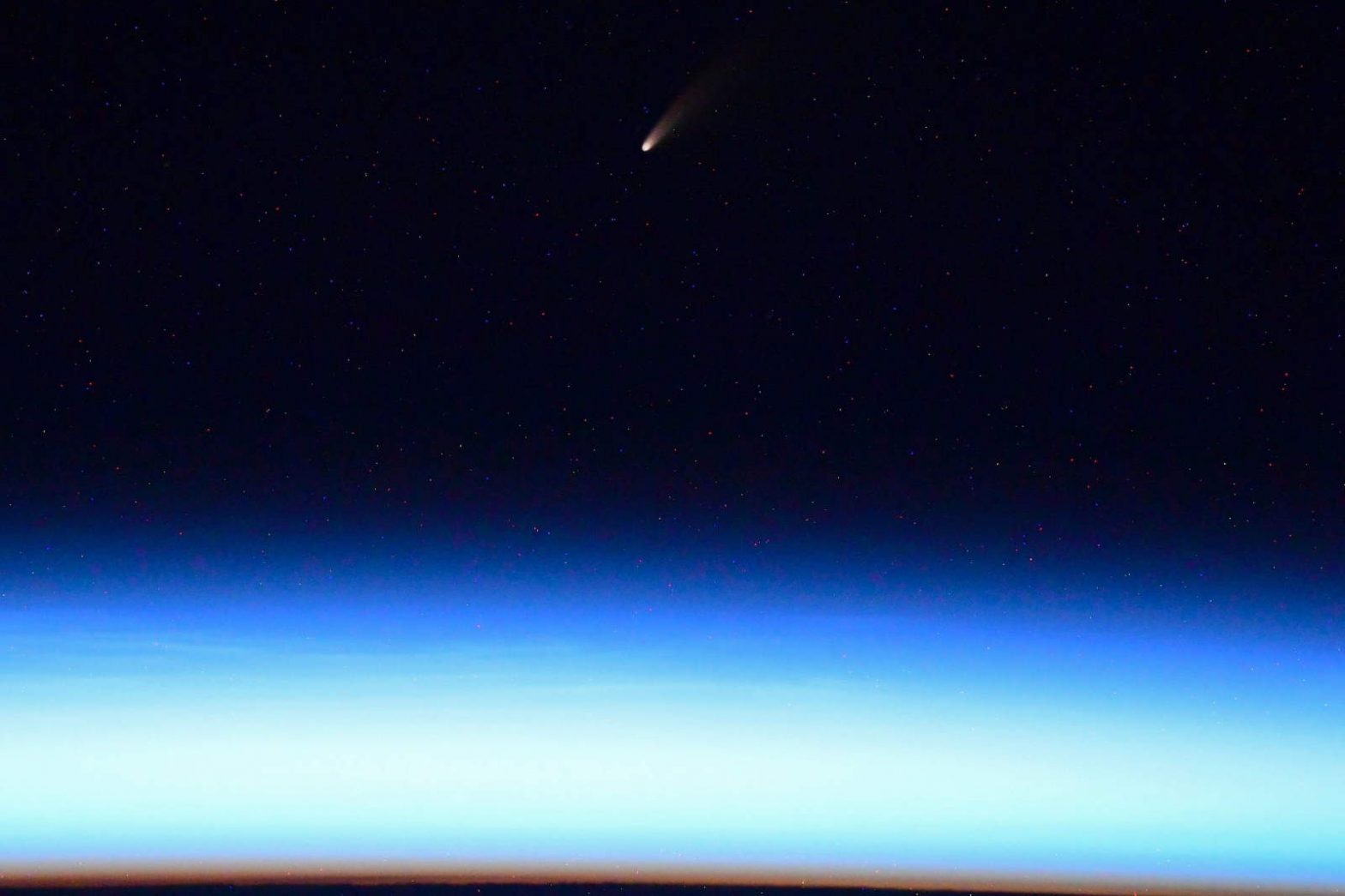
Have you ever seen a comet-rise? This stunning real-time video shows the rise of Comet NEOWISE (C/2020 F3) from the International Space Station (ISS). As the ISS orbits the Earth, Comet NEOWISE rises behind the Earth’s body, above the horizon.

Categories
Earth from Space Astronomy Solar System Space Exploration

Comet NEOWISE and noctilucent clouds – something we’ve never seen before

Russian space agency Roscosmos published spectacular photos of Comet NEOWISE (C/2020 F3) and noctilucent clouds or polar mesospheric clouds (PMCs) above our beautiful planet Earth. This is something we’ve never seen before (a comet and ).

Categories
Solar System Astronomy Space Exploration

Spectacular comet photo from the ISS

Russian cosmonaut Ivan Vagner published a spectacular comet photo on his Twitter account (@ivan_mks63). He tweeted both in Russian and in English and said “During the next revolution I tried to capture the C/2020 F3 (NEOWISE) comet a bit closer, the brightest one over the last 7 years. Its tail is quite clearly visible from the International Space Station!”

Categories
Space Exploration

New Horizons shows nearby stars from an unearthly perspective

NASA’s New Horizons space probe is currently the farthest human-made object that is still able to take photographs. It was launched on January 19, 2006. Now the spacecraft is so far from Earth that the photos taken by New Horizons show nearby stars from an unearthly perspective (see notes 1).

Categories
Space Exploration

Human spaceflight is a risk worth taking, says ESA head

On 12 April, the International Day of Human Space Flight commemorates the first human – Yuri Gagarin – traveling to space in 1961, and the inaugural Space Shuttle mission on the same day in 1981.

Since Gagarin, humans have flown to space hundreds of times, including six missions to the moon, and have maintained a permanent space presence onboard the orbiting International Space Station (ISS) since November 2000.

But now new challenges are on the horizon, including returning to the moon and possibly going to Mars. We spoke to the head of ESA about why humans should go to space, the value of robotic exploration, and what role Europe has to play in the future.

By Jonathan O’Callaghan