Categories
Technology Astrobiology

When Will Humanity Become a Kardashev Type I Civilization?

There are several ways we can measure the progress of human civilization. Population growth, the rise and fall of empires, and our technological ability to reach for the stars. But one simple measure is to calculate the amount of energy humans use at any given time. As humanity has spread and advanced, our ability to harness energy is one of our most useful skills. If one assumes civilizations on other planets might possess similar skills, the energy consumption of a species is a good rough measure of its technological prowess. This is the idea behind the Kardashev Scale.

Categories
Physics

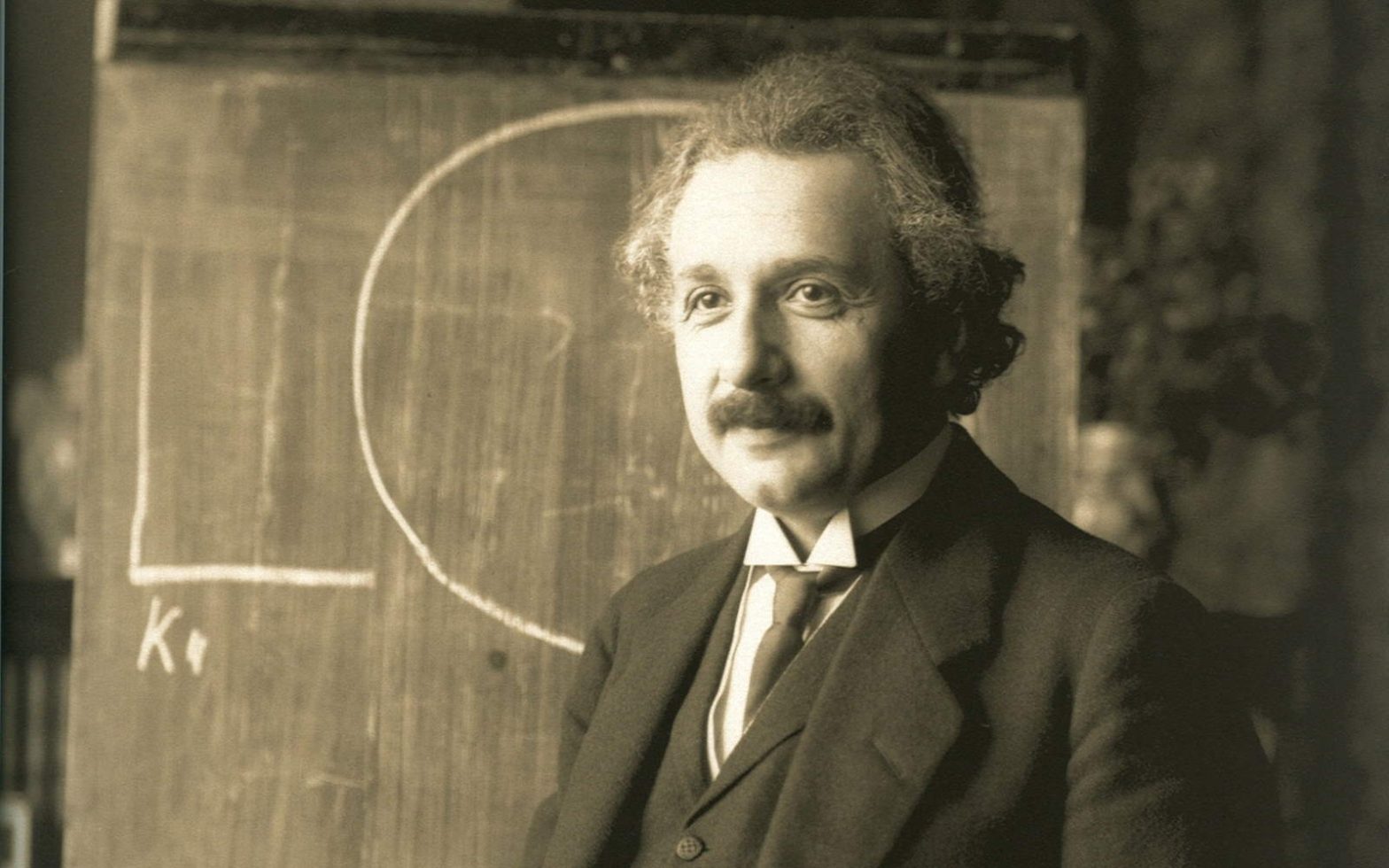
Einstein’s Theory of Relativity [A Summary]

In the history of science and physics, several scholars, theories, and equations have become household names. In terms of scientists, notable examples include Pythagoras, Aristotle, Galileo, Newton, Planck, and Hawking. In terms of theories, there’s Archimede’s “Eureka,” Newton’s Apple (Universal Gravitation), and Schrodinger’s Cat (quantum mechanics). But the most famous and renowned is arguably Albert Einstein, Relativity, and the famous equation, E=mc2. In fact, Relativity may be the best-known scientific concept that few people truly understand.

Categories
Life on Earth

Early Earth was a Horrible Place for Life Because of UV radiation

Earth has had a long and complex history since its formation roughly 4.5 billion years ago. Initially, it was a molten ball, but eventually, it cooled and became differentiated. The Moon was formed from a collision between Earth and a protoplanet named Theia (probably), the oceans formed, and at some point in time, about 4 billion years ago, simple life appeared.