Categories
Photography Astronomy Solar System

This is probably the most beautiful Solar Eclipse photo ever

More than a year ago, on Monday, August 21, around 2 million to 7.4 million Americans traveled to see the first total solar eclipse in 99 years to go coast to coast in the United States. Photographer Jon Carmichael chose another way. He got aboard a Southwest Airlines aircraft and captured the Great American Total Solar Eclipse from an unusual vantage point at 39,000 feet (11,890 meters). And the result is probably the most beautiful Solar Eclipse photo ever.

Categories
Geology Mountains

Mount Etna is sliding into the sea

Mount Etna, Europe’s most active volcano (also one of the most active volcanoes in the world) is sliding into the Ionian Sea at rates of centimeters per year. If part of it falls into the sea, it could create horrible mega-tsunamis that would devastate the eastern Mediterranean shores.

Categories
Earth from Space Space Exploration

Amazing Moon-Earth Photo by the Amateurs using a Chinese Satellite

Amateur astronomers in the Netherlands took an amazing Moon-Earth photo using a Chinese satellite. On May 20, 2018, China launched Queqiao lunar communications relay satellite, a key component of the upcoming Chang’e 4 lunar landing mission. During its journey to the Moon (actually Earth-Moon L2 point (see notes 1), it dropped off a pair of student-made small satellites, Longjiang-1 and Longjiang-2, bound for lunar orbit called. Their purpose was to test out future radio astronomy and interferometry techniques.

Categories
Space Exploration Environment Oceans Planet Earth

Point Nemo [The Spacecraft Graveyard!]

In the middle of the South Pacific Ocean, there’s a location called “Point Nemo”. It’s not a place where humans live, in fact, there is no land there: not an island, not even a small rock. It is actually the remotest place from any human civilization you can find on Earth. It lies at least 2,688 km (1,670 mi) from the nearest land. It is also called the “Oceanic Pole of Inaccessibility” (see notes 1).

Categories
Astrobiology Astronomy Earth from Space Life on Earth Plants Prehistoric Space Exploration

Earth can be a model for detecting vegetation on exoplanets

Back in December 1990, during its flyby of Earth, NASA’s Galileo spacecraft, which studied the planet Jupiter and its moons, as well as several other Solar System bodies, pointed its instruments towards Earth, at the urging of Carl Sagan. And, it has found evidence of life on our planet. This can be a key to detecting vegetation on exoplanets – which is key to a possible intelligent extraterrestrial life.

In a paper published in Nature, researchers wrote “The Galileo spacecraft found evidence of abundant gaseous oxygen, a widely distributed surface pigment with a sharp absorption edge in the red part of the visible spectrum, and atmospheric methane in extreme thermodynamic disequilibrium. Together, these are strongly suggestive of life on Earth.”

Categories
Earth from Space Environment Planet Earth Space Exploration

10 Best Earth Quotes

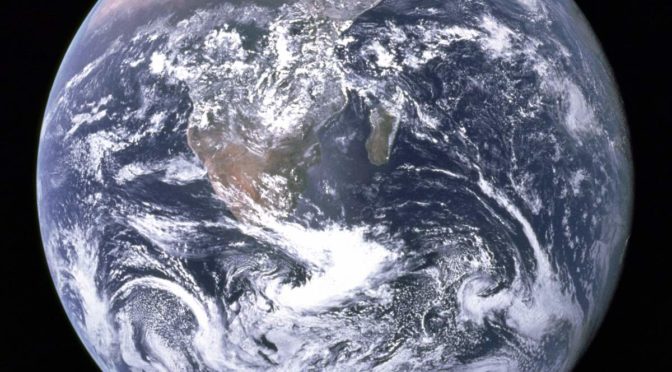
Earth, our beautiful blue planet. It is the third planet from the Sun, but above all, it is our home, the only astronomical object known to harbor life. Here are the top 10 best Earth quotes.

Categories
Solar System Astronomy Science Fiction Space Exploration

5 Surprising Facts about Mars

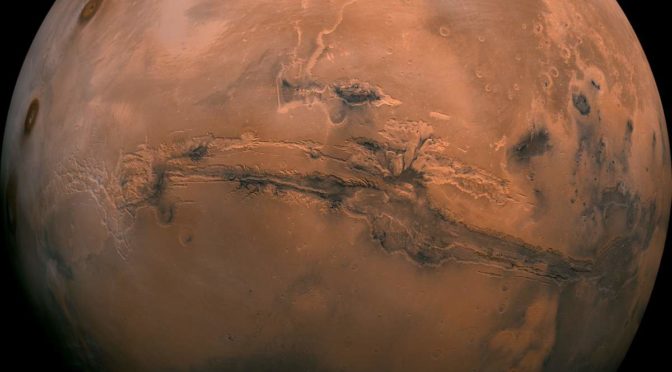
For eons, skywatchers have been fascinated by the pale red dot that not only unpredictably moves backward in the night sky but also shines a compelling blood-red. Its color, indeed, is one of the first features we notice about Mars. It seizes our attention, and its compelling ambiguity has evoked a deep visceral reaction from the nomad in ancient savannas to modern astronomers.

The ancient astronomer may be satisfied to know that, in fact, Mars is literally blood-red: the same chemical reaction that occurs in the iron in Mars’ soil is the same as the same chemical reaction that occurs in the hemoglobin molecule. Mars, is, quite literally, blood red. Even with our cutting-edge technology and science, Mars still bewitches and amazes us as seen with these five surprising facts about Mars.

Categories
Space Exploration Mars Moon Landing Robotics Technology

How NASA Reinvented The Wheel

On August 6, 2012, at 05:17 UTC, NASA has successfully landed a Mini-Cooper-sized rover, Curiosity, on Aeolis Palus in Gale Crater on Mars. The 900-kg rover (899 kg, to be exact, which is 1,982 lbs) is equipped with six 50 cm (20 in) diameter wheels in a rocker-bogie suspension (see notes 1). For the first time in the history of space exploration, the suspension system also served as landing gear for the vehicle, unlike its smaller predecessors.

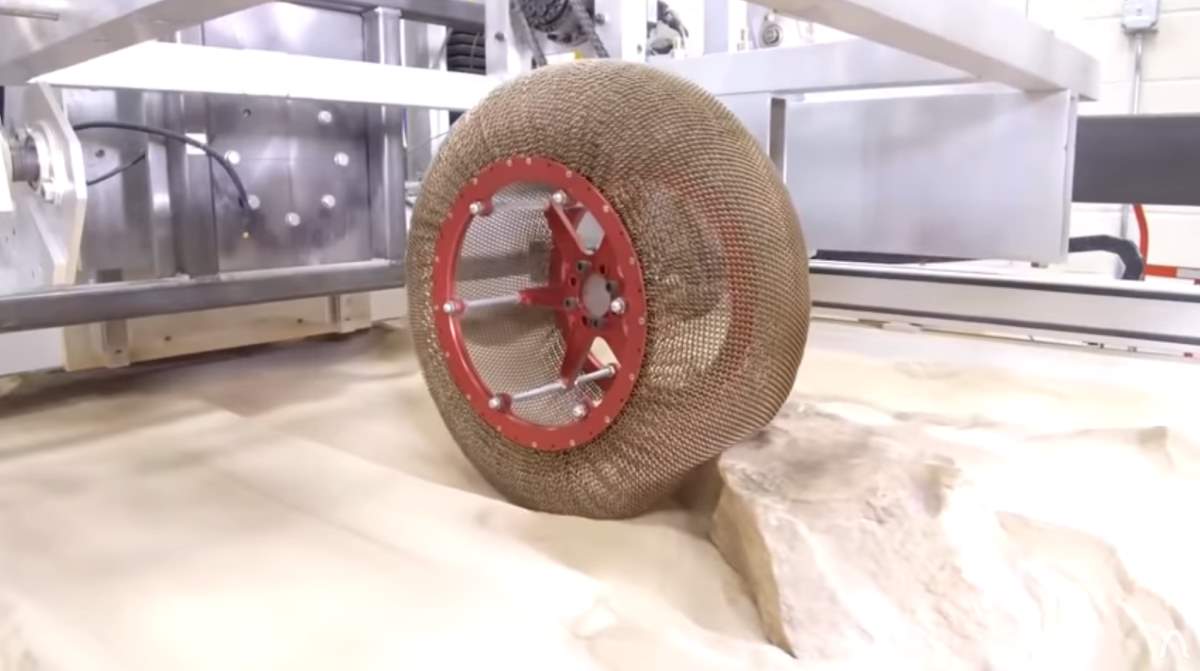
Curiosity “soft-landed”  (wheels down) on the surface of Mars. But, even it’s called “soft-landing”, the touchdown speed was 0.6739m/s vertical and 0.044m/s horizontal, which could damage the wheels. Plus, while the rover is moving, the wheels should withstand the substantial damage through the rough Martian surface. That’s why the wheels of the Curiosity rover have been one of the biggest technical difficulties encountered on the mission (see notes 2).

Categories
Life on Earth Animals Evolution

8 major extinctions due to human interference

If you are one among the many who have watched the movie Rio and have fallen in love with the adorable lead named Blu, then I have some terrible news for you! As of this date, the Spix’s Macaw has been declared “extinct as in wild”.

Categories
Life on Earth Evolution

There are more microbial species on Earth than stars in the galaxy