Categories
Space Exploration Technology

What is a Dyson Sphere and How to Build One?

Currently, we’re slowly transitioning to renewables and fusion energy may become available in the future. If we don’t destroy ourselves or the environment, as humanity progresses further, we will likely gain complete control of the Earth’s resources. At that stage, we’ll probably begin to look outwards for new places to expand into. But, if we want to expand into outer space someday, our planet’s resources are not enough (see the Kardashev scale below). We’d need incredible amounts of energy, even to expand into our solar system. Luckily, we know where to find it: the Sun. To harvest energy from the Sun, we can build a megastructure called the “Dyson Sphere” around it and capture a large percentage of its power output.

Categories
Space Exploration Mars Moon Landing Robotics Technology

How NASA Reinvented The Wheel

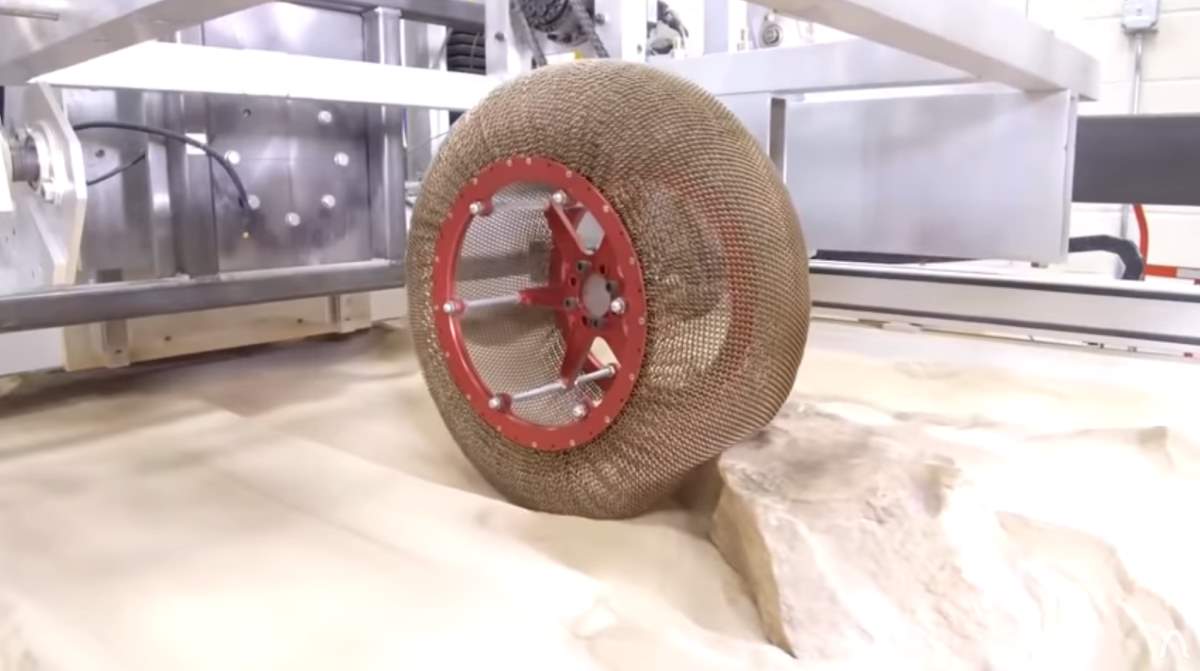
On August 6, 2012, at 05:17 UTC, NASA has successfully landed a Mini-Cooper-sized rover, Curiosity, on Aeolis Palus in Gale Crater on Mars. The 900-kg rover (899 kg, to be exact, which is 1,982 lbs) is equipped with six 50 cm (20 in) diameter wheels in a rocker-bogie suspension (see notes 1). For the first time in the history of space exploration, the suspension system also served as landing gear for the vehicle, unlike its smaller predecessors.

Curiosity “soft-landed”  (wheels down) on the surface of Mars. But, even it’s called “soft-landing”, the touchdown speed was 0.6739m/s vertical and 0.044m/s horizontal, which could damage the wheels. Plus, while the rover is moving, the wheels should withstand the substantial damage through the rough Martian surface. That’s why the wheels of the Curiosity rover have been one of the biggest technical difficulties encountered on the mission (see notes 2).

Categories
Moon Landing Space Exploration Technology

Why can’t we Remake the Rocketdyne F-1 Engine, which took humans to the Moon?

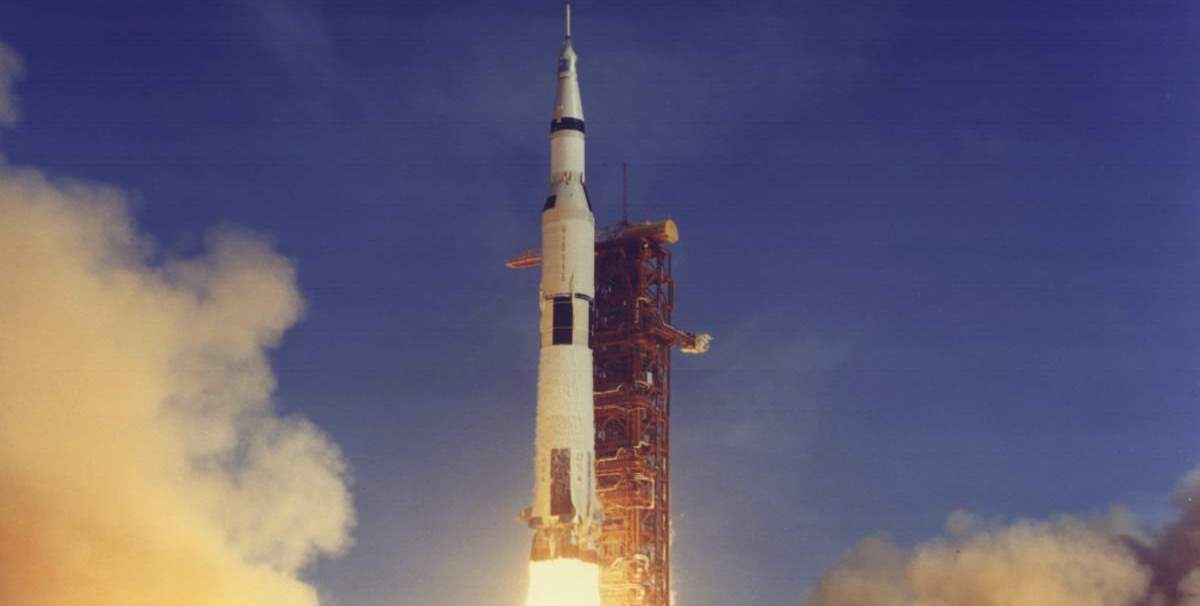
The mighty Saturn V, the rocket that took humans to the moon, remains the tallest, heaviest, and most powerful rocket ever brought to operational status (as of 2018). It was used by NASA between 1967 and 1973. It was powered by five Rocketdyne F-1 engines. With a thrust of 1,746,000 lbf (7,770 kN) in vacuum (1,522,000 lbf / 6,770 kN at sea level), the F-1 remains the most powerful single combustion chamber liquid-propellant rocket engine ever developed.

Today, private companies like SpaceX, Blue Origin, and space agencies like NASA trying to build powerful rockets in order to reach Moon and Mars. But, we’ve already built a rocket that took us to the moon, why don’t we simply remake it (and the engines)? In the video below, Youtube user Curious Droid answers this question.

Categories
Space Exploration Communication This Day in Science, Technology, Astronomy, and Space Exploration History

TDRS-6 was launched on January 13, 1993

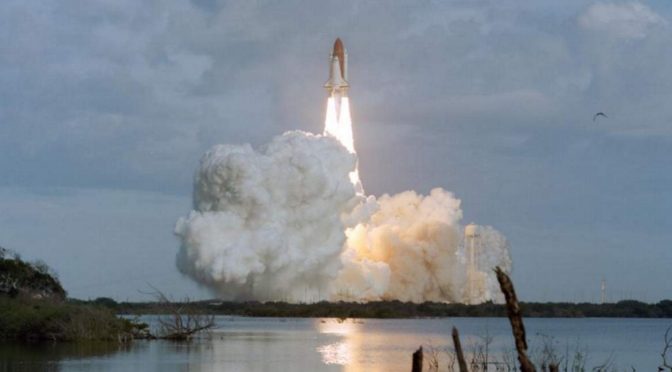
On January 13, 1993, Tracking and Data Relay Satellite 6 (TDRS-6), the American communications satellite launched by Space Shuttle Endeavour. TDRS-6 is still operational today, well past its intended design life”.

Categories
Astronomy Artificial Intelligence

Kepler-90i, the 8th Planet Orbiting a Distant Star was Discovered [using AI and Kepler data]

Using data from the exoplanet-hunting Kepler Space Telescope and a machine learning algorithm from Google, researchers discovered an 8th planet orbiting a distant star. The newly discovered planet is circling Kepler-90, a G-type main-sequence star (Sun-like star), 2,545 light-years from Earth. It is named Kepler-90i.

According to the press release from NASA, Kepler-90i is “a sizzling hot, rocky planet that orbits its star once every 14.4 days“. In this case, computers using Google’s machine learning algorithm, “learned” to identify planets by finding in Kepler data instances where the telescope recorded signals from planets beyond our solar system, known as exoplanets.