Did you know that the Moon and space itself have a smell? Space has a lot of surprises. Here are the 10 lesser-known space facts.

Did you know that the Moon and space itself have a smell? Space has a lot of surprises. Here are the 10 lesser-known space facts.

Today, on average, the Moon is 384,400 km (238,000 miles) away from the Earth. But that was not always the case. Our satellite was much closer in the past. Now, Dr. James O’Donoghue (@physicsJ on Twitter) created the animation below showing the ancient distances and apparent size of the Moon.
The animation also includes the current distance and apparent size of the moon in the Earth’s sky.

The amazing video below is a showcase of spectacular imagery obtained by Japan Aerospace Exploration Agency’s (JAXA) Kaguya/SELENE spacecraft which orbited the Moon for a year and eight months and returned stunning views from its HDTV camera suite. A must-watch!
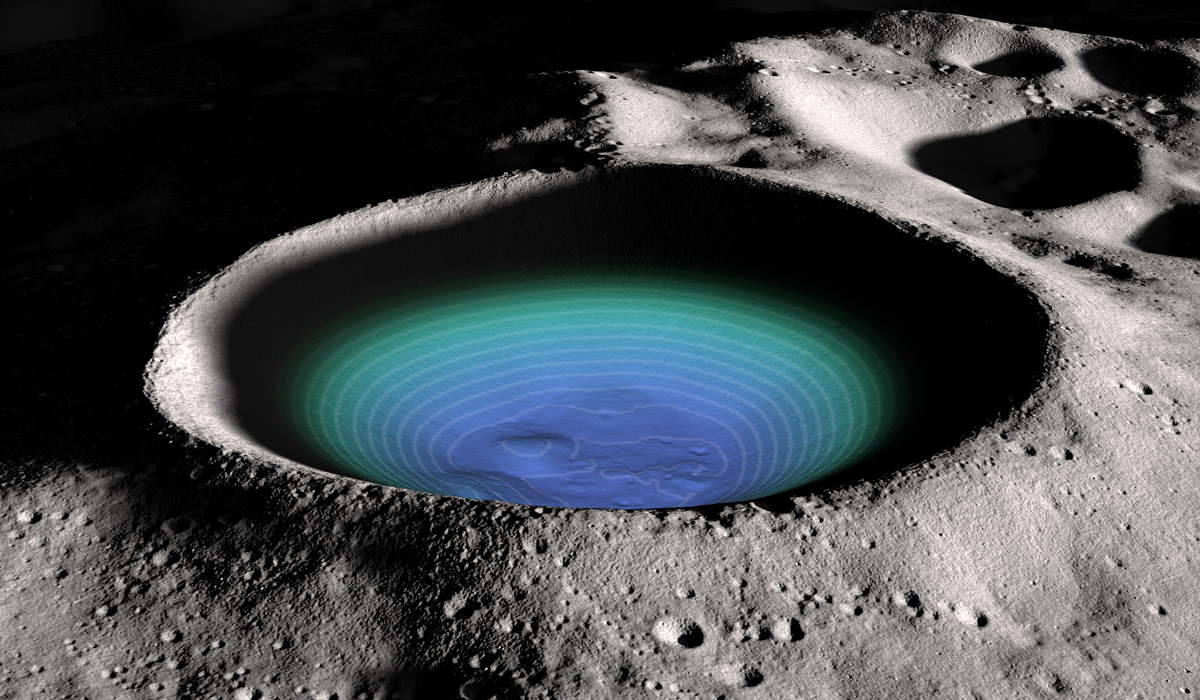
What if we fill a crater on the moon with water? Can we create a lake on the moon? Would the water stay in this artificial lake?

After ʻOumuamua, now we are likely to have another interstellar visitor beyond our solar system: comet C/2019 Q4 (Borisov). So the interstellar objects entering the solar system may not be rare at all.

On June 20, 2019, Hubble Space Telescope snapped this beautiful portrait of Saturn and its rings at the ringed planet’s closest approach to Earth. The image was published on September 12, 2019.

The exoplanet J1407b is simply “Super Saturn”. If you read Isaac Asimov‘s 1986 novel “Foundation and Earth”, you’ll remember how the main characters of the book (Councilman Golan Trevize, historian Janov Pelorat, and Gaian Bliss) were amazed by Saturn’s rings. They were thinking the gas giant with preeminent rings in old stories was just a myth. But after seeing Saturn, they made sure that they found the solar system which contains the Earth, the original home of humanity.

We can turn Earth into a giant telescope. According to a recent study titled “The ‘Terrascope’: On the Possibility of Using the Earth as an Atmospheric Lens”, published by David Kipping of Columbia University, our planet offers an opportunity for pronounced lensing.

To see exactly where the spacecraft and the celestial bodies (planets and other astronomical objects) really are, right now, you can use NASA’s real-time, 3D solar system model.

Even as late as 1991, we had no hard evidence of planets existing outside our solar system (a centuries-old quest), known as “exoplanets”. Today, over 4000 exoplanets are known to exist. NASA has published an amazing video map showing them in the Milky Way galaxy on the Astronomy Picture of the Day website.