Categories
Geology

What is a Megatsunami? [explained]

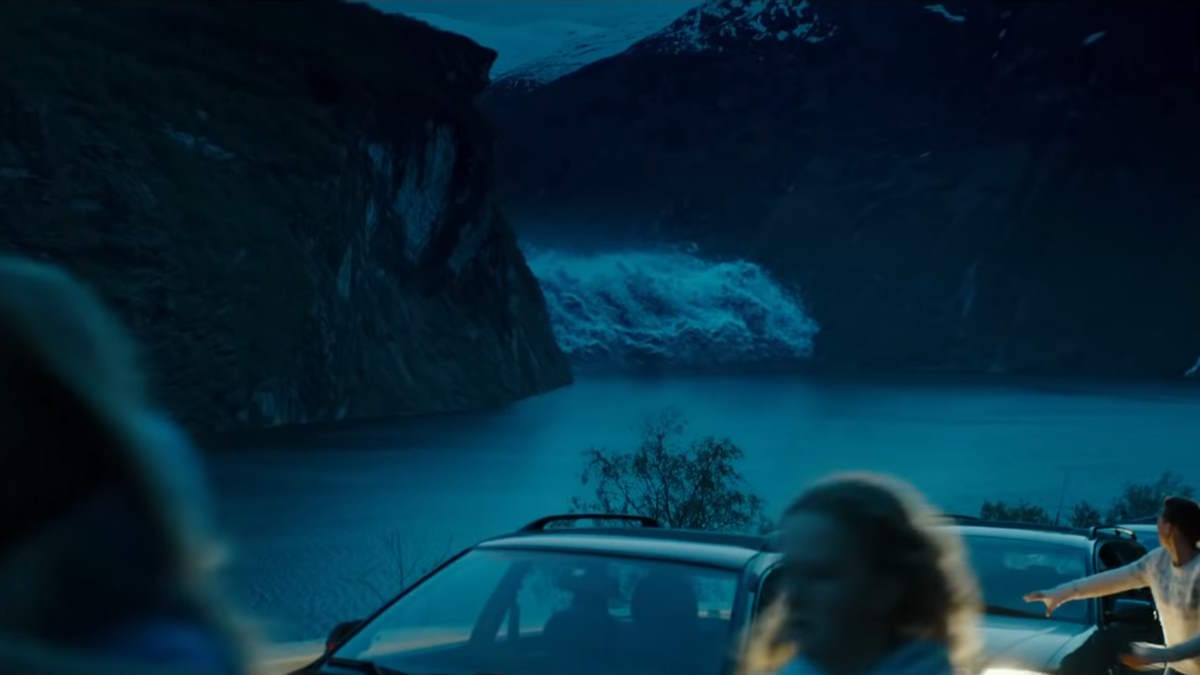
A megatsunami is an exceptionally large and devastating wave that can reach incredible heights. Unlike regular tsunamis triggered by earthquakes, megatsunamis are primarily caused by massive landslides, volcanic eruptions, or asteroid impacts into bodies of water. These catastrophic events displace colossal amounts of water, generating waves that can travel across vast distances with tremendous force. The sheer magnitude of megatsunamis makes them particularly destructive, capable of impacting coastlines with devastating consequences. Their rare occurrence and immense power make megatsunamis a subject of great scientific interest and concern, as understanding their mechanisms and potential impacts is crucial for coastal regions and disaster preparedness.

Categories
Life on Earth Environment Geology

Anthropocene: The New Geological Era, According to Scientists

Our planet is experiencing a new geological era, according to a growing number of scientists. The Anthropocene, as it is being called, marks the first time in Earth’s history that human activities have had a significant and lasting impact on the planet’s ecosystems, geology, and climate. The term “Anthropocene” is derived from the Greek words “anthropos,” meaning human, and “kainos,” meaning new, to reflect the idea that humans are the driving force behind this new epoch. While the idea of the Anthropocene is still a subject of debate among some scientists, the concept has gained widespread acceptance and is viewed as a call to action to address the environmental challenges that our planet faces today.

Categories
Life on Earth Animals Geology Planet Earth Prehistoric

If Earth’s lifetime was the distance from LA to New York City

Our old planet, the Earth is 4.54 billion years old. In fact, the human mind can no longer make any sense of large numbers like that. Numbers like 1, 2, 14, 20, 50 are all quantities that we encounter quite frequently in our daily lives. And our brain evolved to conceptualize numbers like that: our ancestors saw two lions; they hunted five deer in one hunting party, the population of their tribe was 20, etc…

But when the numbers are getting big, i.e. 1,000; 10,000… the problem begins: these numbers become increasingly difficult to conceptualize. Now, what happens when we try to conceptualize quantities like billions, like the Earth’s age? We can’t actually rationalize the immensity of such a big number. Because we haven’t a model of 4.54 billion that’s been compressed into something recognizable to the human mind.

Categories
Environment Animals Geography Geology Life on Earth Physics

Your Life On Earth [presented by BBC]

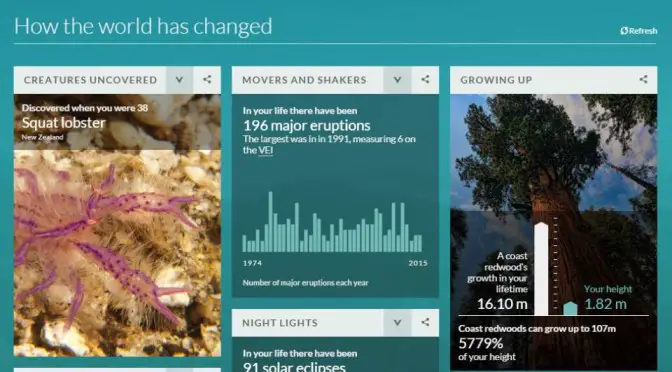
“Your life on Earth” is a nice interactive webpage presented by the BBC – The British Broadcasting Corporation: how you and the world have changed since you were born? You’re simply entering your birth date, gender, and height; selecting units (metric or imperial/US), and then watching how our planet (and you) has changed in your lifetime.

Categories
Geography Geology Places

Vulcan Points [island within a lake that is situated on an island located in a lake on an island]

Can you imagine an island within a lake that is situated on an island located in a lake on an island? Confused? Well, it is really confusing, but this island does indeed exist: Vulcan Points is the world’s largest island within a lake (Crater Lake) that is situated on an island (Taal Volcano Island) located in a lake (Lake Taal) within an island (Luzon).

Categories
Geography Earth from Space Geology Places

Lake Baikal: the deepest lake in the World

Lake Baikal, located in southern Russia, is the world’s deepest and oldest lake, containing over 20% of the world’s unfrozen freshwater. This massive body of water, which is also a UNESCO World Heritage Site, is home to thousands of unique plant and animal species that can only be found in its waters. With its stunning natural beauty and fascinating ecological significance, Lake Baikal is truly a wonder of the world. In this article, we will explore some of the most interesting and surprising Lake Baikal facts that make this place so special.

Categories
Earth from Space Geology Life on Earth Places Planet Earth

Changing Earth: How Satellites Give us a Unique Perspective on our Evolving Planet

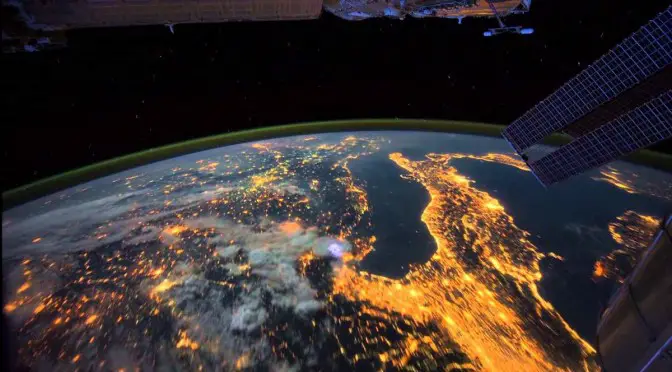
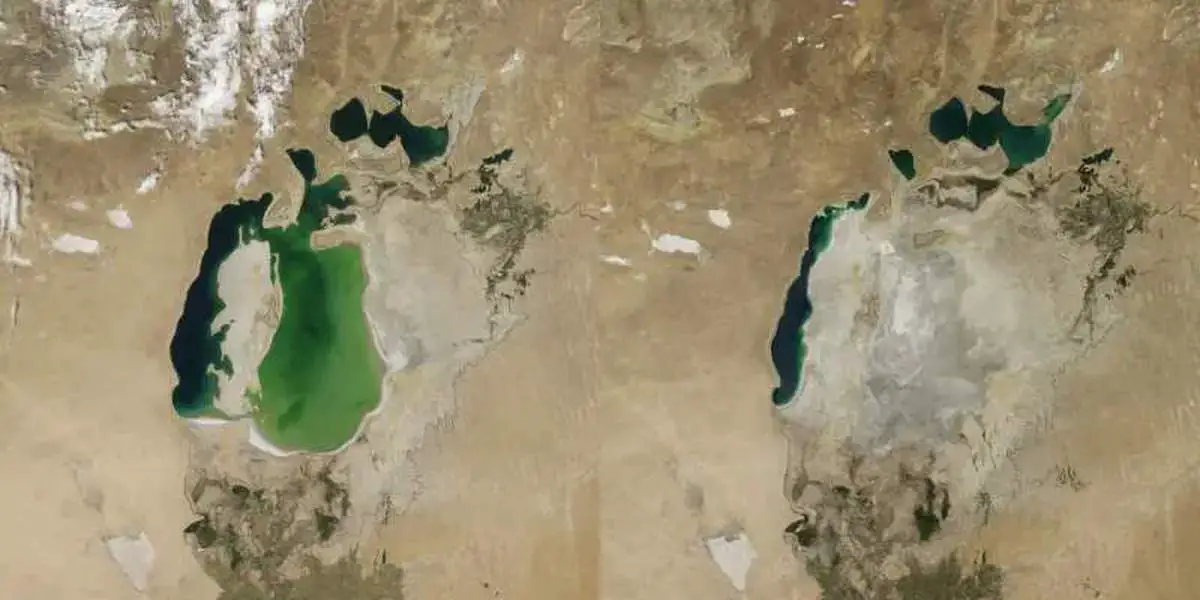
The ever-changing Earth: our planet is constantly changing over the years. Some changes are part of nature, and some of them are on humanity’s shoulders. Some scientists even suggest that the Earth has entered a new geological epoch defined by human impact, called the “Anthropocene“. Over the years astronauts have taken photos of the Earth from space and documented these changes. NASA’s World of Change series shows how our planet’s land, oceans, atmosphere, and Sun are changing over time.

Categories
Geology Earth from Space Places

10 Krakatoa facts about the 1883 eruption

On August 26-27, 1883, one of the most notorious volcanic eruptions in history occurred. Krakatau (often spelled Krakatoa) erupted with an estimated 10,000 thousand times the force of the Hiroshima atomic bomb. The eruption was so violent that two-thirds of the island of Krakatoa and its surrounding archipelago were destroyed: about 23 square kilometers of Earth sank into the Sunda Strait.

Across Java and Sumatra, burning rock rained down, damaging and even destroying settlements. The sky went black.

Here are 10 amazing facts about the 1883 eruption of Krakatoa.