Categories
Earth from Space Life on Earth

“One Strange Rock” Trailer

We live on a strange rock… and nobody realizes that better than astronauts. A new documentary, including astronaut experiences of looking down at Earth from space, is coming to National Geographic Channel soon. The award-winning American filmmaker and writer Darren Aronofsky, the American actor, producer, rapper, comedian, and songwriter Will Smith, and experienced astronauts join forces to tell the extraordinary story of why life as we know it exists on Earth. Premieres March 26 on the National Geographic Channel. Here’s the trailer of the “One Strange Rock” documentary.

Categories
Space Exploration Astronomy Science Fiction

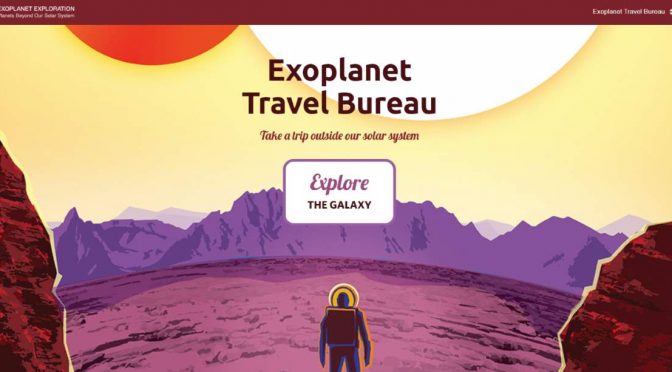
Exoplanet Travel Bureau by NASA [Interactive 3D Images]

Will we ever visit other stars? Maybe, in the distant future, if humans won’t become extinct, our grand grand grand … (insert a hundred or a thousand “grand” here) children can stand on an exoplanet’s surface someday. But, we don’t have to wait. NASA has opened a new web page, an “Exoplanet Travel Bureau”, and we can, at least, see the artists’ imaginations of what an exoplanet surface looks like, based on available data. NASA warns, there are no actual images of the exoplanets, obviously. With interactive 3D images, it is still an exciting experience.

Categories
Space Exploration Astronomy

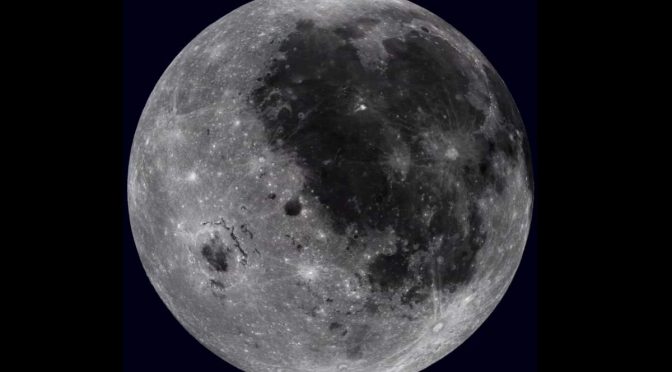
Rotating Moon from the Lunar Reconnaissance Orbiter

NASA APOD (Astronomy Picture of the Day) published an amazing video showing a rotating Moon. In fact, no one sees the Moon rotate like this. We see only one side of the Moon because the Moon is tidally locked to Earth. But, thanks to modern digital technology combined with many detailed images returned by the Lunar Reconnaissance Orbiter (LRO), a high-resolution virtual Moon rotation movie has been composed.

Categories
Mars Moon Landing Science Fiction Space Exploration

Others Will Follow [Short Sci-Fi Film]

A great short science fiction film, “Others Will Follow”, created and directed by Andrew Finch and published on Vimeo, tells the story of a crewed Mars mission. An accident occurs and the spacecraft breaks apart, the last survivor (we don’t see what happens to the rest of the crew, but presumably they have died) manages to send an inspirational message back to Earth. A must-watch.

Categories
Astrobiology Solar System Space Exploration

We May Have Already Detected Signs of Alien Microbes on Saturn’s Moon Enceladus

According to a new study, microbes like those found in Earth’s deep ocean could potentially thrive in the underground ocean of Saturn’s icy moon Enceladus. Both molecular hydrogen (H2) and methane (CH4) already have been detected in the plume. Researchers have shown that Methanothermococcus okinawensis, a methanogenic archaeon first isolated from a deep-sea hydrothermal vent on the western Pacific Ocean, can produce methane under conditions known to exist on Enceladus.

Categories
Space Exploration Astronomy Earth from Space Solar System

OSIRIS-REx Captures New Earth-Moon Image from 39.5 Million Miles

NASA’s asteroid-sampling OSIRIS-REx spacecraft captured a new Earth-Moon image on Jan. 17, 2018, from a distance of 39.5 million miles (63.6 million kilometers). Spacecraft used its NavCam1 imager to take this photo, as part of an engineering test. In the image, The Earth and the moon are just two bright dots against the vastness of black space – which reminds us of Carl Sagan’s famous speech: “That’s here. That’s home. That’s us.”

Categories
Earth from Space Space Exploration

Astronaut Robert Stewart untethered above the Earth during Manned Maneuvering Unit (MMU) Exercise

A breathtakingly beautiful photo of a historical moment: NASA Astronaut Robert L. Stewart untethered above the Earth during the first Manned Maneuvering Unit (MMU) exercise. The photo was taken on February 7, 1984, during the EVA 1 (Extravehicular activity) of STS-41-B, the tenth NASA Space Shuttle mission, and the fourth flight of the Space Shuttle Challenger. The total duration of the spacewalk was 5 hours 55 minutes. Bruce McCandless II and Robert L. Stewart tested a nitrogen-propelled, hand-controlled backpack device called the Manned Maneuvering Unit (MMU). In this EVA, Bruce McCandless II broke the untethered spacewalking record with a distance of 98 meters (320 feet).

Categories
Space Exploration Earth from Space Solar System

New Horizons beats Voyager 1’s Record for being farthest from Earth while capturing images

It took 27 years, but finally, NASA’s New Horizons spacecraft beat Voyager 1‘s record for being farthest from Earth while capturing images. Taken on December 5, 2017, New Horizons’ image of the open star cluster NGC 3532 (also commonly known as the Football Cluster or the Wishing Well Cluster) became the farthest image ever made by any spacecraft, breaking a 27-year record set by Voyager 1. But for a very short time! About 2 hours later, New Horizons broke its own record with images of two Kuiper Belt objects.

Categories
Space Exploration Earth from Space Moon Landing

20 Longest Spacewalks in History

Spacewalking or Extravehicular activity (EVA) is any activity done by an astronaut or cosmonaut outside a spacecraft beyond the Earth’s appreciable atmosphere (a moonwalk is also an EVA). The first spacewalker was the Soviet cosmonaut Alexey Arkhipovich Leonov. He became the first human to conduct an extra-vehicular activity (EVA) on March 18, 1965; exiting the capsule during the Voskhod 2 mission for a 12-minute spacewalk. Since this very short EVA, a lot of astronauts/cosmonauts spent many hours outside their spacecraft, mostly for maintenance missions. Here are the top 20 longest spacewalks in history.

Categories
Space Exploration Earth from Space

Can you find the spacewalker’s legs in this photo?