On January 10, 2019, the China National Space Agency unveiled the panoramic image of the far side of the Moon taken by the

On January 10, 2019, the China National Space Agency unveiled the panoramic image of the far side of the Moon taken by the

Scientists from the China National Space Administration (CNSA) have confirmed that the seedlings taken to the far side of the moon with

Margaret Hamilton is not only one of the first software developers, but she also literally created the term “Software Engineering” to describe her work. The code she wrote successfully put humans on the moon for the first time.

A beautiful photo showing the first flower grown in space (a zinnia flower) with our beautiful Earth in the background. Now retired NASA astronaut Scott Kelly shared p
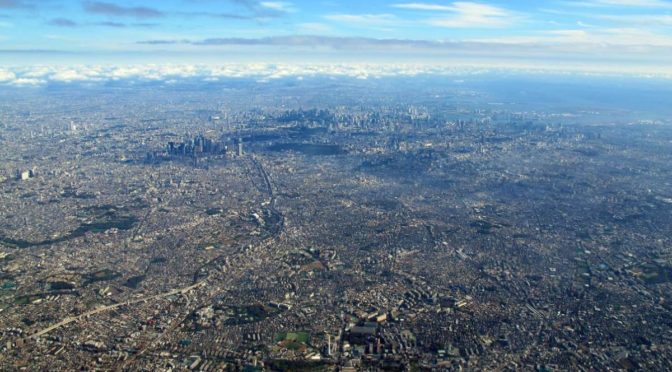
The world has been urbanizing rapidly in recent decades. In 1950, only 30 percent of the world’s population lived in urban areas, a proportion that grew to 55 percent by 2018. The global urbanization rate masks important differences in urbanization levels across geographic regions.
Northern America is the most urbanized region, with 82 percent of its population residing in urban areas, whereas Asia is approximately 50 percent urban, and Africa remains mostly rural with 43 percent of its population living in urban areas in 2018 (United Nations, 2018).

Musicians from Zambia (Africa) protest the destruction of the environment and the wildlife with the song titled “

Launched by NASA on September 5, 1977, to study the outer solar system, the Voyager 1 is the furthest human-made object from Earth. As of October 2022, it is more than 14,749,847,051 miles (23,737,577,852 km) away from our home planet. It is also moving away at a speed of 38,026.77 mph (61,198.15 km/h) relative to the Sun.
Despite that huge distance (even the light covers that distance in almost 22 hours!), thanks to NASA’s Deep Space Network (DSN), we can still communicate with it (also with its sister, Voyager 2). But how far can Voyager 1 go before we lose communication?

Finnish 3D artist Kimi Talvitie has made some really impressive 3D models of SpaceX’s stainless steel Starhopper (the shorter test vehicle of Starship), Starship (previously known as the BFS – Big Fragging Spaceship) and Super Heavy booster (previously known as the BFR – Big Fragging Rocket) and published them on his Twitter account. They are amazing!

A beautiful photo! SpaceX’s first Crew Dragon, which will carry astronauts to and from the International Space Station (ISS) is on the launchpad with the new astronaut walkway ahead of the first major test flight.
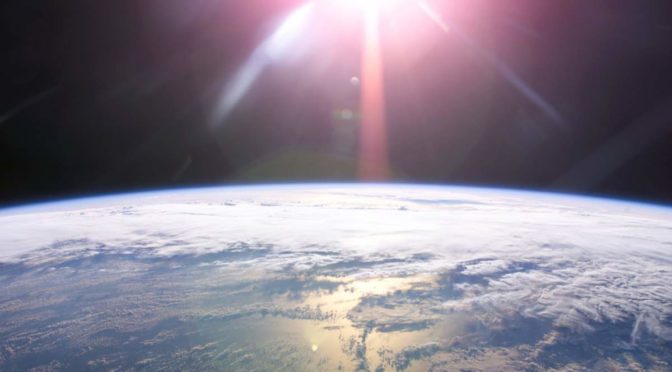
We only see one side of the moon, because it is tidally locked to the planet Earth (tidal locking the situation when an object’s orbital period matches its rotational period). What if the Earth was tidally locked to the Sun?