Categories
Solar System

Oceans of the Solar System

Created by the Universidad de Puerto Rico en Arecibo (the University of Puerto Rico at Arecibo) scientists, this amazing infographic shows the volumes of the oceans of the Solar System. The unit used is the volume of the liquid water on Earth, so the ocean volumes of the other planetary objects are given by the multiples of the volume of the oceans on our planet.

Categories
Astronomy Astrobiology

NASA’s Planet Patrol Project lets the volunteers help to find exoplanets

NASA announced a new citizen science project called “Planet Patrol” which lets the volunteers help to find exoplanets using TESS Space Telescope (Transiting Exoplanet Survey Satellite) data. It is similar to another NASA citizen science project, “Backyard Worlds”, where volunteers or the “citizen scientists” are checking telescope images the same way the American astronomer Clyde Tombaugh (February 4, 1906 – January 17, 1997) found Pluto, the original “Planet 9” in 1930. In this case, volunteers will collaborate with professional astronomers as they sort through a stockpile of star-studded images collected by NASA’s TESS Space Telescope (Transiting Exoplanet Survey Satellite).

Categories
Solar System Astronomy

Moon passing in front of Mars in this spectacular video

On September 6, 2020, French astrophotographer Thierry Legault (@ThierryLegault) went to the South of Lisbon to capture the event of the Moon passing in front of Mars. The result is this spectacular video, titled “Occultation of Mars by the Moon” by Legault himself.

Categories
Astrobiology Solar System

Life on Venus? Astronomers detected phosphine which is a strong signature of life

Life on Venus? Astronomers have detected the first sign of life in the deadly clouds of Venus. They found phosphine which displays a strong signature of life. If we can detect life itself soon, this might be the most exciting news in history.

Categories
Solar System Astronomy

Backyard Worlds: NASA is asking for volunteers to help find the hypothetical Planet 9

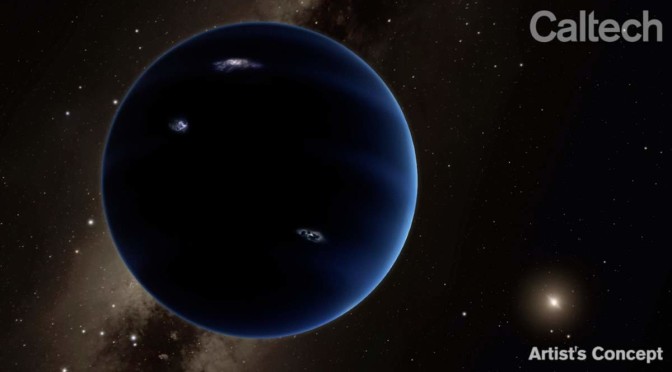
Some astronomers think in our outer solar system there’s a giant, undiscovered world hiding and they call it (for obvious reasons) Planet Nine. Whether it exists, it could be 5-10 times the size of the Earth and orbit Sun hundreds of times farther away than Earth orbiting Sun. Now, a NASA citizen science project called Backyard Worlds: Planet 9 enlists volunteers to help find this hypothetical giant planet.

Categories
Solar System

Ancient Mars: how Mars looked like when there was liquid water on its surface

The Planetary Society published an amazing animation showing the ancient Mars – how the red planet looked like when there was liquid water on its surface.

Categories
Solar System Astronomy

Saturn and its rings: Hubble’s spectacular new photo (July 4, 2020)

NASA’s Hubble Space Telescope took this spectacular photo of Saturn and its rings on July 4, 2020, when the ringed gas giant was 839 million miles (1,35 billion kilometers) from Earth.

Categories
Astronomy

Most-detailed 3D map of the Universe has been released

On Jul 20, 2020, scientists have released what they call the “most-detailed 3D map of the universe ever produced”. This incredible map shows 11 billion years of the Universe’s history, with galaxies closest to Earth appearing in purple & blue, and distant galaxies in yellow & red.

Categories
Earth from Space Astronomy Solar System Space Exploration

Comet NEOWISE and noctilucent clouds – something we’ve never seen before

Russian space agency Roscosmos published spectacular photos of Comet NEOWISE (C/2020 F3) and noctilucent clouds or polar mesospheric clouds (PMCs) above our beautiful planet Earth. This is something we’ve never seen before (a comet and ).

Categories
Solar System Astronomy Space Exploration

Spectacular comet photo from the ISS

Russian cosmonaut Ivan Vagner published a spectacular comet photo on his Twitter account (@ivan_mks63). He tweeted both in Russian and in English and said “During the next revolution I tried to capture the C/2020 F3 (NEOWISE) comet a bit closer, the brightest one over the last 7 years. Its tail is quite clearly visible from the International Space Station!”