Categories
Climate Animals Environment Life on Earth

We have an ethical obligation to relieve individual animal suffering

Last winter, unforgettable video footage online showed a starving polar bear, struggling in its Arctic hunting grounds. Because of global warming, the ice was thin and the food supply was scarce. The video generated a wellspring of sympathy for the plight of this poor creature, and invigorated calls for stronger efforts to combat climate change – and rightly so.

Such advocacy on behalf of wildlife usually focuses on species and the effects of human-caused climate change on their survival and wellbeing as the ecosystems on which they depend undergo drastic changes. Thus, we should act to save the polar bear – that is, the polar bear species – by doing what we can to preserve its natural ecosystem. I am fully behind this kind of advocacy. Anybody who cares about the future of our planet and its occupants should be.

Categories
Global Warming Climate

History of Global Warming in just 34 Seconds

Climate Central channel has put the 116 years history of global warming into a just 34-second video. The result is terrifying.

Categories
Geography Climate Earth from Space Global Warming

18 Largest Islands on Earth

An island or isle is any piece of sub-continental land that is surrounded by water. It is believed that there are over 100,000 islands in the world. It’s difficult to put a figure to the exact number as there are different kinds of them in various water bodies including oceans, seas, lakes, and rivers. There is even an island within a lake that is situated on an island located in a lake on an island. Only 322 of them are larger than 1000 km2 (386 sq mi). Here are the top 18 largest islands on Earth. Why 18? Because this is the number of islands that have a land area of greater than 100,000 square kilometers (38,610 square miles).

Categories
Climate

Coldest place on Earth: New satellite data reveals lowest temperature recorded in Antarctica

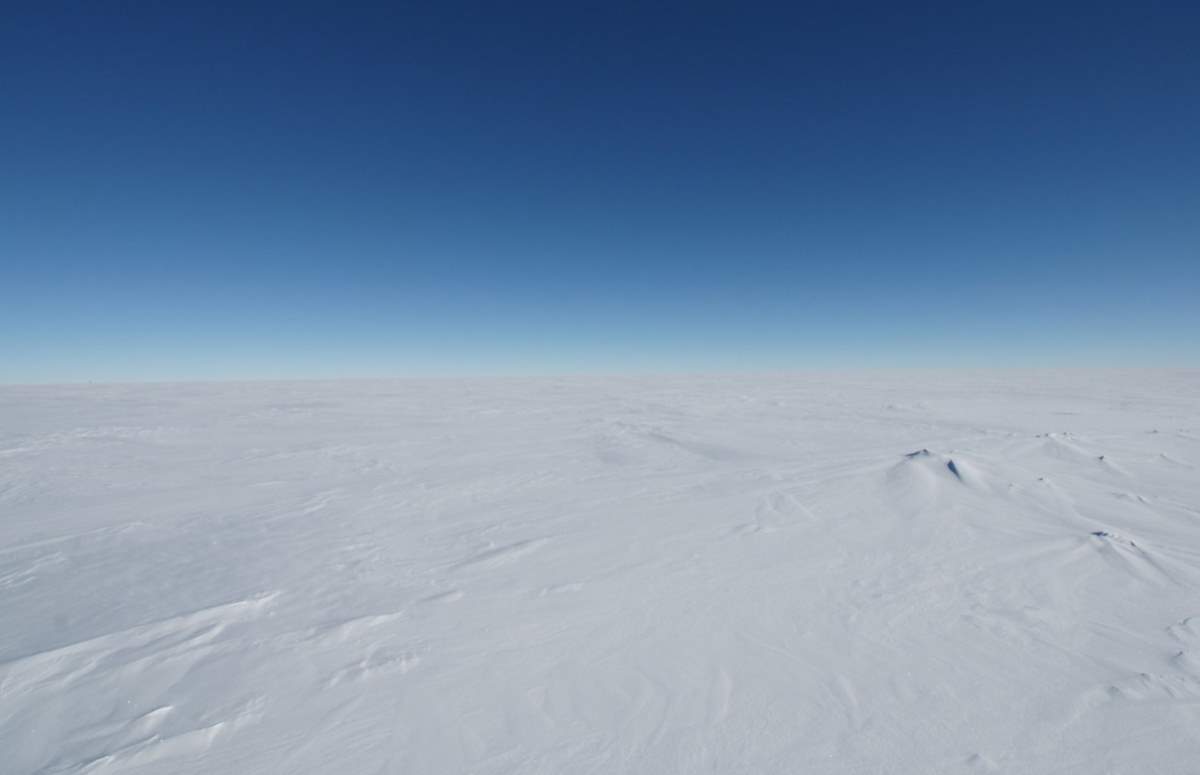
According to a new study published this week in the AGU (American Geophysical Union) journal Geophysical Research Letters, several spots on the East Antarctic Plateau reach temperatures of nearly -100 °C (-148 °F) during the Antarctic winter. Researchers re-examined the data from several Earth-observing satellites and found that Antarctica, the coldest place on Earth is even colder than previously thought.

Categories
Prehistoric Animals Climate Global Warming Life on Earth

Dinosaur Killer Asteroid Triggered a Global Warming [And It Lasted 100,000 Years!]

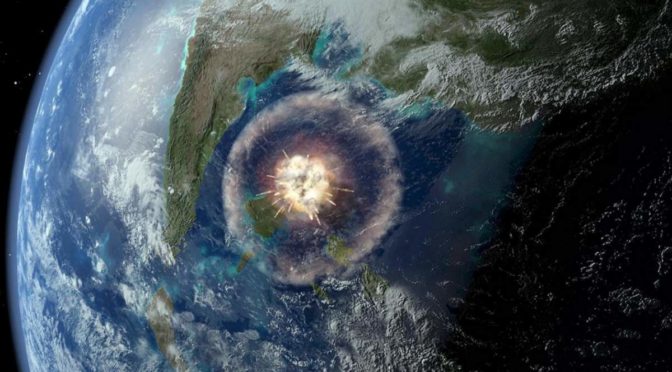
Around 66 million years ago, an asteroid or comet at least 10 kilometers (6 miles) in diameter impacted a few miles from the present-day town of Chicxulub in Mexico (hence it is dubbed as the “Chicxulub impactor”, the “dinosaur-killer”), at around 64,000 kilometers per hour (40,000 mph). The impact has created a crater (Chicxulub crater) more than 180 km (110 miles) in diameter. But, what’s more, the energy of the impact (which is equivalent of about ten billion Hiroshima atom bombs) vaporized the rock which was rich in sulfur compounds, filling the air with a thick cloud of dust, similar to that created by a catastrophic volcanic eruption.

Categories
Global Warming Animals Climate Insects Life on Earth Plants

Most species hold their geographic range if we limit global warming to 1.5°C [new study]

If we limit global warming to 1.5°C rather than 2°C above the pre-industrial levels by the year 2100, the impacts of climate change would be much less dramatic, a new study says. According to the researchers, for vertebrates and plants, the number of species losing more than half their geographic range by 2100 will be halved when warming is limited to 1.5°C, compared with projected losses at 2°C. It would be even better for insects, the most diverse group of animals on Earth: the number is reduced by two-thirds.

Categories
Global Warming Climate

Atmospheric Carbon Dioxide Reached the Highest Levels in 800,000 years

According to measurements from Mauna Loa Observatory in Hawaii, with 410.31 ppm (parts per million), the level of carbon dioxide in Earth’s atmosphere hit a new high in April 2018. This is the highest point for the last 800,000 years.

Last year’s (April 2017) value, 409.00 ppm, was also a record high. As you can see in the graph below, which shows recent monthly mean carbon dioxide measured at Mauna Loa Observatory, Hawaii, it’s a continuing trend.

Categories
Climate Astronomy Planet Earth

What would happen if the Earth started spinning backward?

The dynamics of the ocean and the atmosphere are strongly influenced by the Earth’s rotation. Currently, our planet rotates from west to east (prograde, which appears counterclockwise) with a linear velocity of 465.1013 m/s (1674.365 km/h or 1040.40 mph) at the equator. What would happen if the Earth started spinning backward (from east to west)?

Categories
Global Warming Climate

Global Warming: Future Greenhouse Gas Emission Scenarios

The future of our carbon dioxide and greenhouse gas emissions will decide how many degrees planet Earth will be warmer by 2100 (relative to pre-industrial temperatures). Using the data from Climate Action Tracker, the online publication that shows how living conditions are changing, Our World In Data has published a chart showing future greenhouse gas emission scenarios and how each scenario would result in estimated global warming by 2100.

Categories
Climate

Climate Reanalyzer [Visual Climate and Weather Datasets]