Categories
Global Warming Climate Environment

Global Sea-Level Rise Accelerating [New Study]

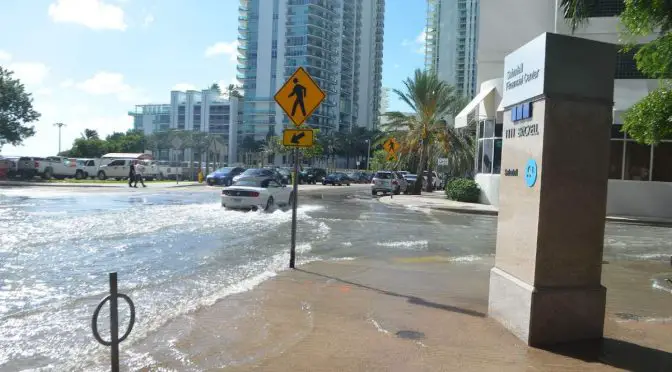
As a result of global warming, the seas warm and ice melts. Naturally, Earth’s oceans have risen steadily – or at least, it was thought so. According to a new study based on 25 years of NASA and European satellite data, rather than increasing steadily, global sea-level rise has been accelerating in recent decades. If this trend continues, by the year 2100, sea-level rise will be around 65 cm (25.6 in), twice as big as previously thought. This is more than enough to cause significant problems for coastal cities.

Satellite altimetry (see notes 1) has shown that since 1993, the global mean sea level has been rising at a rate of ∼3 ± 0.4 millimeters per year. Researchers show that this rate is accelerating at 0.084 ± 0.025 mm/y2, which agrees well with climate model projections. This acceleration is driven mainly by increased melting in Greenland and Antarctica because of global warming. If the sea level continues to change at this rate and acceleration, sea-level rise by 2100 (∼65 cm ± 12 cm, compared with 2005) will be more than double the amount if the rate was constant at 3 mm/y, researchers conclude.
Categories
Climate Earth from Space Places

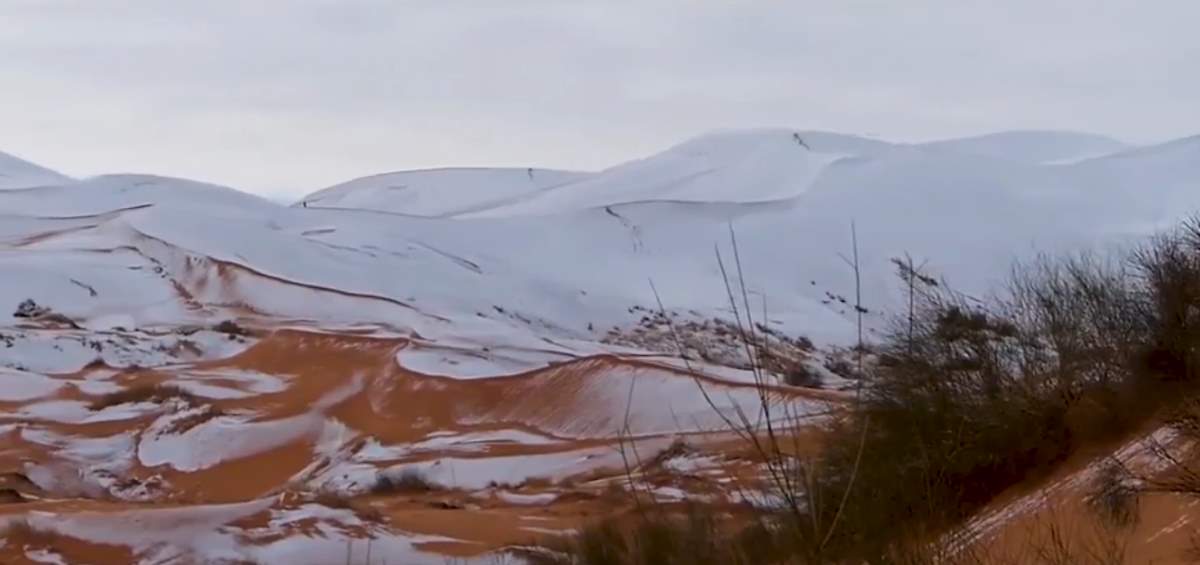
Snow In Sahara, World’s Hottest Desert

On Sunday, January 07, 2018, the residents of Aïn Séfra, a small town in Algeria, experienced a rare phenomenon: snow in Sahara, the world’s hottest desert. In the video below, published by National Geographic, snow-dusted the desert’s sandy dunes. With temperatures touching 33.8 degrees Fahrenheit (1 °C), this white blanket stayed briefly through the morning before melting away. However, a few residents found the opportunity to enjoy some winter fun.

Categories
Climate Earth from Space

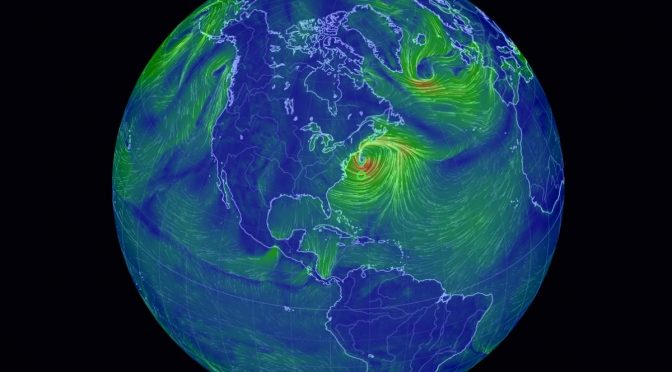
Earth Wind Map: See Current Wind Speeds all over the Earth

This is so cool! With this tool, called “Earth Wind Map”, an animated map of global wind, weather, and ocean conditions, you can see current wind speeds all over the Earth, in real time!

Categories
Climate

National Ice Core Laboratory Stores Valuable Ancient Ice

The US government keeps a massive archive of ancient ice inside the National Ice Core Laboratory (NICL) in Denver, Colorado. This ice could hold important information about Earth and its climate throughout its history.

Categories
Prehistoric Climate Evolution Life on Earth

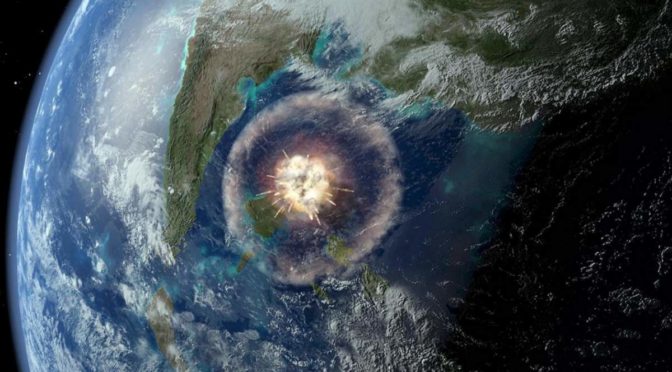
Dinosaur-killer asteroid hit the “worst possible place” 66 million years ago, say Scientists

According to the scientists who drilled into the Chicxulub crater buried underneath the Yucatán Peninsula and the Gulf of Mexico, the dinosaur-killer asteroid hit the “worst possible place” (for the dinosaurs, of course). They summarized their findings so far in a BBC Two documentary titled “The Day The Dinosaurs Died”. The documentary was presented by professors Alice Roberts and Ben Garrod.

Categories
Earth from Space Climate Space Exploration

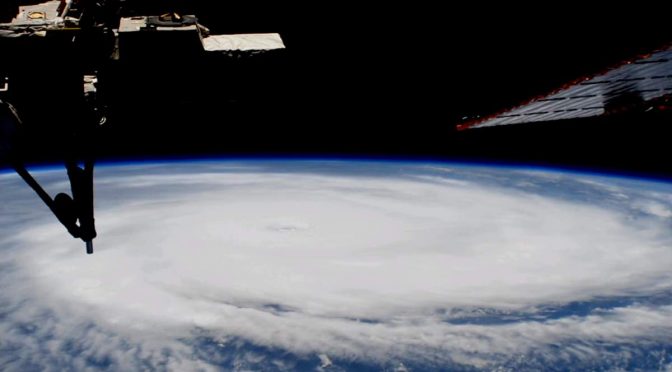
International Space Station Passes Over Hurricane Irma (Video)

External cameras on the International Space Station captured views during its overhead passes of Hurricane Irma. The most intense Atlantic hurricane observed in over a decade, Hurricane Irma was an extremely powerful tropical cyclone, which became a Category 5 hurricane on September 5. It reached peak intensity with 185 mph (295 km/h) winds on September 6.

Its category dropped to 3 as it passed along Cuba, but, while crossing over warm waters between Cuba and the Florida Keys, it became stronger again and rose to Category 4 on September 10. Then dropped back to Category 3 by the time it made a second Florida landfall on Marco Island. Hurricane Irma weakened to a Category 2 hurricane later that day. As of September 12, it is not a hurricane anymore, weakened to a tropical storm, and then a tropical depression six days after its peak intensity (see notes 1).

Categories
Global Warming Climate Environment

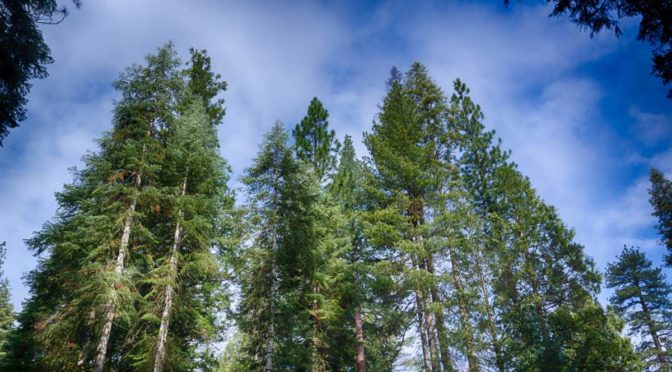
Only planting trees is not enough to prevent global warming, says study

Our civilization emits so much CO2 into the Earth’s atmosphere, that only planting trees is not enough, according to a new study.

Limiting global warming to below 2°C above compared to preindustrial times requires not only massive near-term greenhouse gas emissions reductions but also the application of “negative emission” techniques that extract already emitted carbon dioxide from the atmosphere called tCDR (terrestrial carbon dioxide removal). One method to remove already emitted carbon dioxide from the Earth’s atmosphere is the establishment of extensive plantations of fast-growing tree and grass species (biomass plantations).

Categories
Geography Climate Earth from Space Global Warming Mountains Planet Earth

Antarctica Facts: 36 Interesting Things about the Frozen Continent

Antarctica, the southernmost continent, is a vast and virtually uninhabited land of extremes, entirely covered by ice and surrounded by some of the planet’s most treacherous waters. Despite its icy conditions, this frozen wilderness holds the title of the largest desert on Earth due to its minimal precipitation. Its unique environment, harsh climate, and isolated position have fascinated explorers and scientists alike for centuries. From its staggering ice sheets to its remarkable wildlife, Antarctica is a place full of mystery and wonder. Here are some fascinating facts about this extraordinary continent that will give you a deeper insight into the coldest place on the planet.

Categories
Climate Places

Daily Life in Oymyakon, the Coldest Inhabited Place on Earth (Video)

Oymyakon, a village in Oymyakonsky Ulus of the Sakha Republic (Yakutia), the Russian Federation, is considered as the coldest inhabited place on Earth. On February 6, 1933, a temperature of -67.7 °C (-90 °F) was recorded at Oymyakon’s weather station. The village is considered as one of the Pole of Colds (see notes 1) of the northern hemisphere.

Categories
History Climate Places Solar System

Ancient Carvings in Göbekli Tepe Show a Comet hit Earth 13,000 Years Ago