Categories
Planet Earth Environment People

World’s Water Inequality Crisis

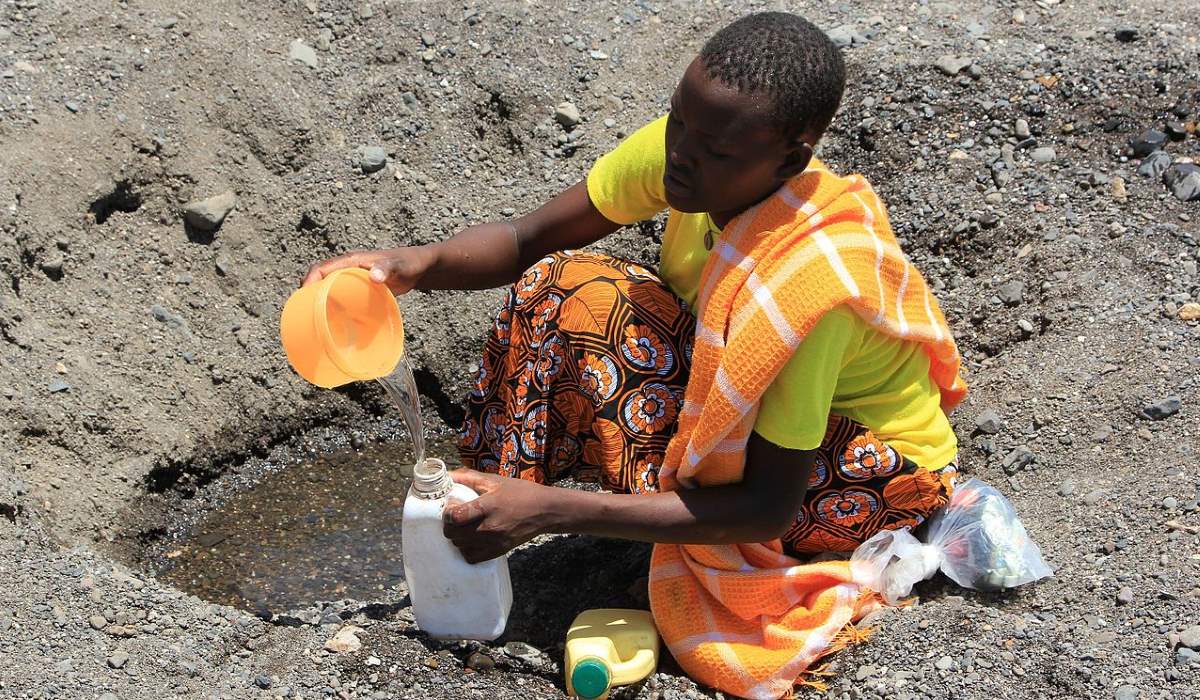
Despite today people are living longer, healthier, and happier lives than ever before, there are still many problems that humanity should address. One of the most important of them is water inequality. While people in First World countries can very easily take fresh, clean water for granted, more than 800 million others in impoverished areas have no access to any clean water source. It is a common occurrence in some regions for people to defecate openly, walk more than 30 minutes to access clean water, and share toilets with other humans. In 2018, is this really something that we should just accept as an inevitable way of the world?
Categories
Global Warming Climate Environment

Global Sea-Level Rise Accelerating [New Study]

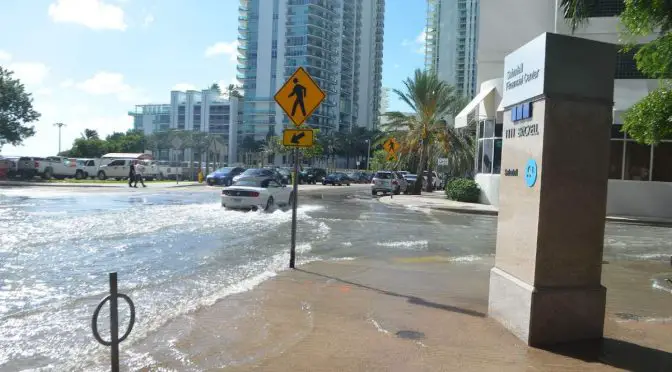
As a result of global warming, the seas warm and ice melts. Naturally, Earth’s oceans have risen steadily – or at least, it was thought so. According to a new study based on 25 years of NASA and European satellite data, rather than increasing steadily, global sea-level rise has been accelerating in recent decades. If this trend continues, by the year 2100, sea-level rise will be around 65 cm (25.6 in), twice as big as previously thought. This is more than enough to cause significant problems for coastal cities.

Satellite altimetry (see notes 1) has shown that since 1993, the global mean sea level has been rising at a rate of ∼3 ± 0.4 millimeters per year. Researchers show that this rate is accelerating at 0.084 ± 0.025 mm/y2, which agrees well with climate model projections. This acceleration is driven mainly by increased melting in Greenland and Antarctica because of global warming. If the sea level continues to change at this rate and acceleration, sea-level rise by 2100 (∼65 cm ± 12 cm, compared with 2005) will be more than double the amount if the rate was constant at 3 mm/y, researchers conclude.

Categories
Global Warming Climate Environment

Only planting trees is not enough to prevent global warming, says study

Our civilization emits so much CO2 into the Earth’s atmosphere, that only planting trees is not enough, according to a new study.

Limiting global warming to below 2°C above compared to preindustrial times requires not only massive near-term greenhouse gas emissions reductions but also the application of “negative emission” techniques that extract already emitted carbon dioxide from the atmosphere called tCDR (terrestrial carbon dioxide removal). One method to remove already emitted carbon dioxide from the Earth’s atmosphere is the establishment of extensive plantations of fast-growing tree and grass species (biomass plantations).

Categories
Mars Energy Environment Moon Landing Planet Earth Space Exploration

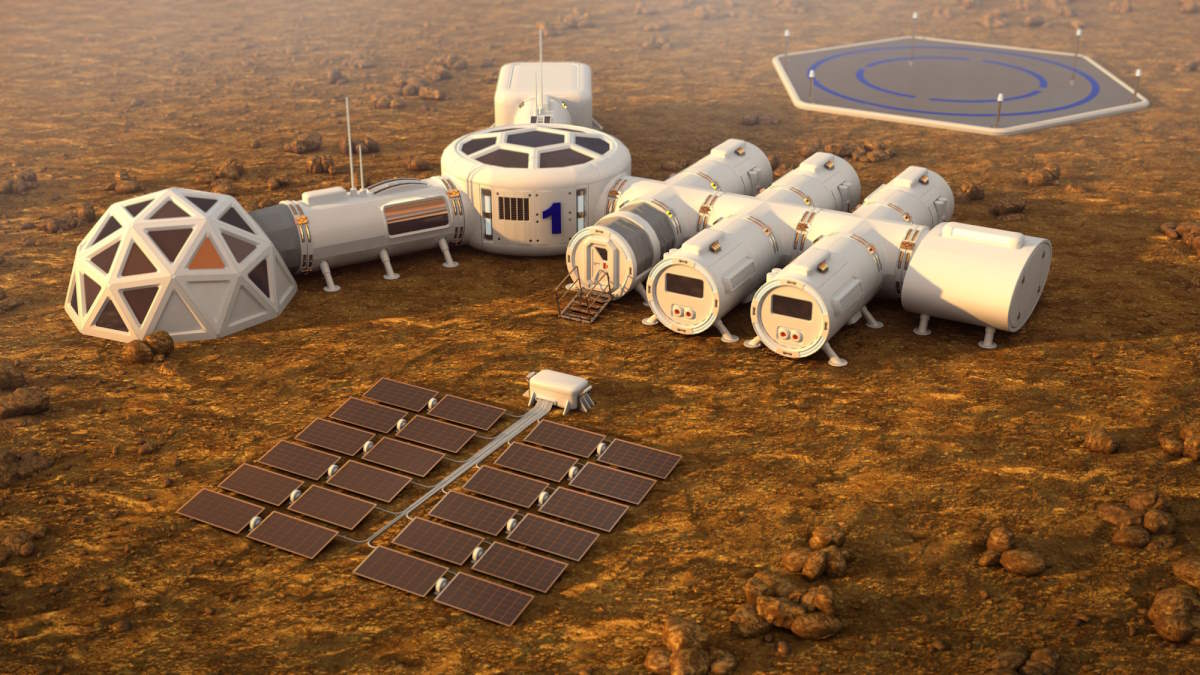
Here’s Why We Should Colonize Mars [and Other Planets and the Moons too]

In the quest for expanding the boundaries of human exploration and ensuring the long-term survival of our species, the idea of colonizing Mars and other celestial bodies has emerged as a captivating and viable possibility. While Earth remains our home, the potential colonization of Mars, along with other planets and moons within our solar system, presents a host of compelling reasons. From scientific discovery and resource utilization to the preservation of our species, the case for venturing beyond our blue planet grows increasingly enticing.

Categories
Life on Earth Environment Geology

Anthropocene: The New Geological Era, According to Scientists

Our planet is experiencing a new geological era, according to a growing number of scientists. The Anthropocene, as it is being called, marks the first time in Earth’s history that human activities have had a significant and lasting impact on the planet’s ecosystems, geology, and climate. The term “Anthropocene” is derived from the Greek words “anthropos,” meaning human, and “kainos,” meaning new, to reflect the idea that humans are the driving force behind this new epoch. While the idea of the Anthropocene is still a subject of debate among some scientists, the concept has gained widespread acceptance and is viewed as a call to action to address the environmental challenges that our planet faces today.

Categories
Environment Animals Geography Geology Life on Earth Physics

Your Life On Earth [presented by BBC]

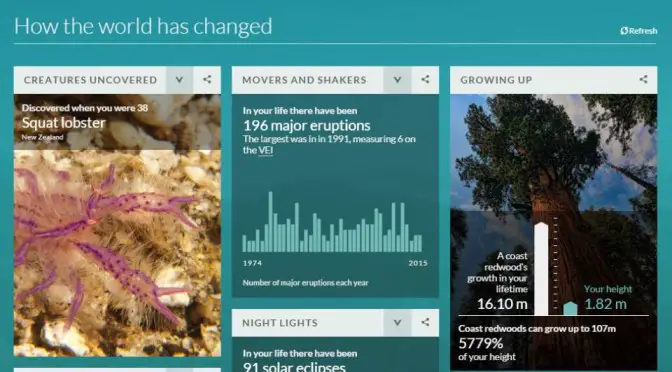
“Your life on Earth” is a nice interactive webpage presented by the BBC – The British Broadcasting Corporation: how you and the world have changed since you were born? You’re simply entering your birth date, gender, and height; selecting units (metric or imperial/US), and then watching how our planet (and you) has changed in your lifetime.