Categories
Space Exploration Astronomy Mars Physics Solar System

Speed of Light [Perfect Visual Explanations]

The speed of light is the Universal speed limit – nothing can travel faster than light. In the vacuum (commonly denoted c), its exact value is 299,792,458 meters per second (around 186,000 miles per second). In other words, if you could travel at the speed of light, you could go around the Earth 7.5 times in one second.
Categories
Space Exploration Moon Landing

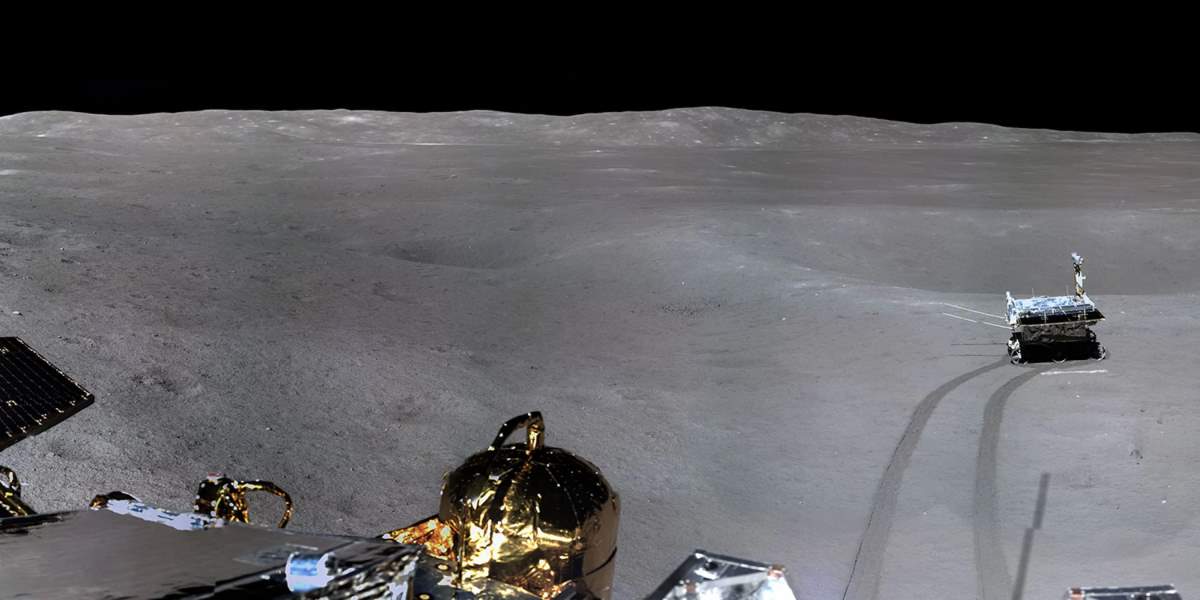
Panorama of the far side of the Moon by the Chinese Lunar Lander

On January 10, 2019, the China National Space Agency unveiled the panoramic image of the far side of the Moon taken by the Chang’e 4 Lunar Lander.

Categories
Moon Landing Software Space Exploration Technology

Margaret Hamilton, the first software engineer [her code got humans on the moon!]

Margaret Hamilton is not only one of the first software developers, but she also literally created the term “Software Engineering” to describe her work. The code she wrote successfully put humans on the moon for the first time.

Categories
People Planet Earth

The urbanization of the world

The world has been urbanizing rapidly in recent decades. In 1950, only 30 percent of the world’s population lived in urban areas, a proportion that grew to 55 percent by 2018. The global urbanization rate masks important differences in urbanization levels across geographic regions.

Northern America is the most urbanized region, with 82 percent of its population residing in urban areas, whereas Asia is approximately 50 percent urban, and Africa remains mostly rural with 43 percent of its population living in urban areas in 2018 (United Nations, 2018).

Categories
Climate Animals Environment Global Warming Life on Earth

African musicians protest the destruction of the environment with a song titled “Samalilani” (Preserve)

Musicians from Zambia (Africa) protest the destruction of the environment and the wildlife with the song titled “Samalilani” (means “preserve” in English). They also draw attention to climate change and environmental issues facing Zambia, like deforestation and charcoal burning.

Categories
Space Exploration Solar System

How far can Voyager 1 go before we lose contact?

Launched by NASA on September 5, 1977, to study the outer solar system, the Voyager 1 is the furthest human-made object from Earth. As of October 2022, it is more than 14,749,847,051 miles (23,737,577,852 km) away from our home planet. It is also moving away at a speed of 38,026.77 mph (61,198.15 km/h) relative to the Sun.

Despite that huge distance (even the light covers that distance in almost 22 hours!), thanks to NASA’s Deep Space Network (DSN), we can still communicate with it (also with its sister, Voyager 2). But how far can Voyager 1 go before we lose communication?

Categories
Space Exploration Mars

SpaceX Starhopper, Starship and Super Heavy Booster 3D Models Comparison

Finnish 3D artist Kimi Talvitie has made some really impressive 3D models of SpaceX’s stainless steel Starhopper (the shorter test vehicle of Starship), Starship (previously known as the BFS – Big Fragging Spaceship) and Super Heavy booster (previously known as the BFR – Big Fragging Rocket) and published them on his Twitter account. They are amazing!

Categories
Planet Earth Evolution Life on Earth Solar System

What if the Earth was tidally locked to the Sun?

We only see one side of the moon, because it is tidally locked to the planet Earth (tidal locking the situation when an object’s orbital period matches its rotational period). What if the Earth was tidally locked to the Sun?

Categories
Physics Space Exploration

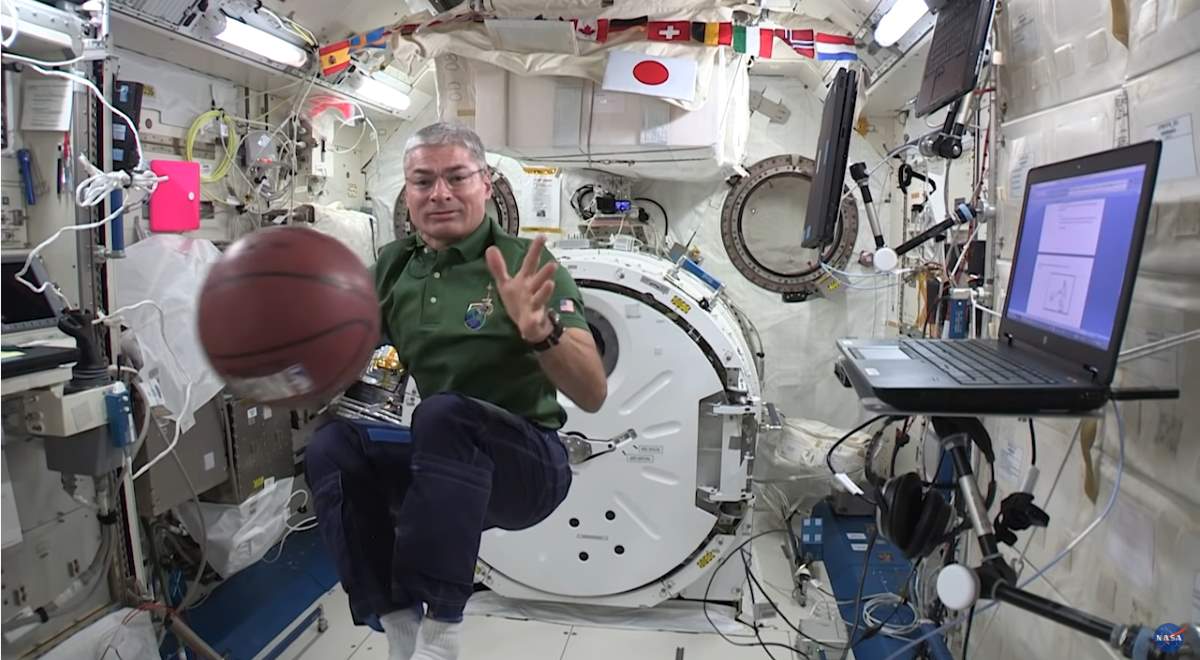
Astronauts demonstrate Newton’s second and third laws of motion

A microgravity environment is a perfect place to demonstrate basic physics, i.e. Newton’s laws of motion. In the videos published by the NASA Johnson channel, astronauts aboard the International Space Station (ISS) just do that.

Categories
Space Exploration Astronomy Solar System

486958 Arrokoth image against a starry background

A beautiful 486958 Arrokoth image (initially nicknamed Ultima Thule) taken by the Long Range Reconnaissance Imager (LORRI) aboard NASA’s New Horizons spacecraft in original context against a starry background (i.e., not zoomed in).