Categories
Space Exploration Technology

What is a Dyson Sphere and How to Build One?

Currently, we’re slowly transitioning to renewables and fusion energy may become available in the future. If we don’t destroy ourselves or the environment, as humanity progresses further, we will likely gain complete control of the Earth’s resources. At that stage, we’ll probably begin to look outwards for new places to expand into. But, if we want to expand into outer space someday, our planet’s resources are not enough (see the Kardashev scale below). We’d need incredible amounts of energy, even to expand into our solar system. Luckily, we know where to find it: the Sun. To harvest energy from the Sun, we can build a megastructure called the “Dyson Sphere” around it and capture a large percentage of its power output.

Categories
Space Exploration Moon Landing

Here’s why NASA Launches Rockets From Cape Canaveral, Florida

Have you ever wondered why NASA chose Cape Canaveral to launch rockets? NASA’s most important rocket launches including the Mercury program, Project Gemini, the Moon Missions, and Space Shuttle lifted off from the Kennedy Space Center in Cape Canaveral, Florida.

In fact, at the first look, Florida doesn’t look like a convenient place for rocket launches: the southeasternmost state gets hit by lightning more than anywhere in the United States. And getting hit by lightning is a very bad thing during a rocket launch (see notes 1). What’s more, monster hurricanes frequently hit Florida (almost every year).

So, why NASA chose Cape Canaveral?

Categories
Moon Landing Earth from Space Space Exploration

Apollo 8: The Daring Adventure

On December 21, 1968, Apollo 8, the second crewed spaceflight mission in NASA’s Apollo program was launched and became the first crewed spacecraft to leave low Earth orbit, reach the Moon, orbit it, and safely return. It was also the first crewed launch of the Saturn V rocket.

Categories
Moon Landing Space Exploration

Neil Armstrong’s Parents at I’ve Got a Secret [Video]

On September 17, 1962, Neil Armstrong’s parents, Stephen Koenig Armstrong and Viola Louise Engel Armstrong joined “I’ve Got a Secret”, a panel game show produced by Mark Goodson and Bill Todman for CBS television. They had a “secret” that their son just became an astronaut for NASA on that day, one of the nine newly chosen men for future space missions.

Mr. and Mrs. Armstrong whispers to the Host Garry Moore’s ears their secret: “Our Son became an astronaut today”.

A few minutes later, Moore asks an incredible question: “Now, how would you feel, Mrs. Armstrong, if it turned out – of course, nobody knows – but if it turns out that your son is the first man to land on the moon? What, how do, how would you feel?” He asks this nearly seven years before it actually happened on July 20, 1969! Neil’s mother’s reply is priceless, “Well, guess I’d just say god bless him and I wish him the best of all good luck.”

Categories
Space Exploration Mars

InSight Mission Raw Images are available on the web

NASA’s InSight Mars Lander (Interior Exploration using Seismic Investigations, Geodesy, and Heat Transport – InSight) was launched on 5 May 2018 at 11:05 UTC aboard an Atlas V-401 rocket. It traveled 483 million kilometers (300 million miles) in almost six months and successfully landed at Elysium Planitia on Mars on 26 November 2018 at 19:52:59 UTC. Shortly after landing, it has sent back the first photo. Now, NASA publishes InSight Mission raw images on its website, you can see them any time you want on the mission’s multimedia webpage.

Categories
Earth from Space Space Exploration

Space Shuttle Endeavour over Cook Strait

This amazing photo was taken from the International Space Station showing the Space Shuttle Endeavour over Cook Strait, New Zealand. It was taken on November 25, 2002, as the space shuttle approaches the International Space Station (ISS) during STS-113 rendezvous and docking operations.

Categories
Mars Earth from Space Space Exploration

Earth, a “Bright Evening Star” as seen from Mars

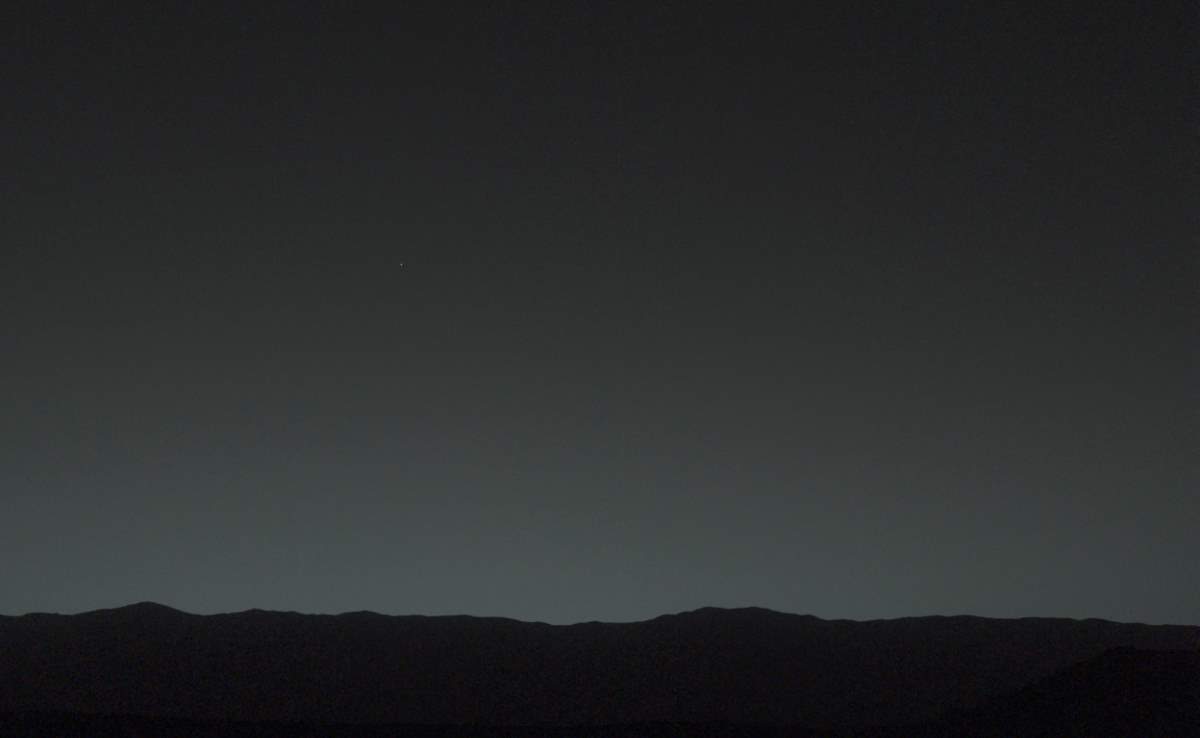
On January 31, 2014, about 80 minutes after sunset on its 529th Martian day (or sol), NASA’s Curiosity Rover has turned its camera back home and took this amazing photo of Earth and Moon from a distance of around 99 million miles (160 million kilometers). In the image which has the serial number PIA17936, Earth can be seen as the brightest point of light in the night sky, a little left of the center of the photo, and our Moon appears just below Earth.

Categories
Moon Landing Space Exploration

Apollo 11’s journey to the moon, annotated [video]

On July 20, 1969, at 20:17 UTC, two American astronauts, Apollo 11 mission commander Neil Armstrong and pilot Buzz Aldrin landed the lunar module Eagle on the Moon. It was the first time humans set foot on another planetary body other than Earth, making the moon landing probably the most monumental event in history.

Vox.com published a beautiful video highlighting the key moments of the Apollo 11 mission.

Categories
Earth from Space Planet Earth Space Exploration

The Secrets behind Earth’s Multi-colored Airglow (video)

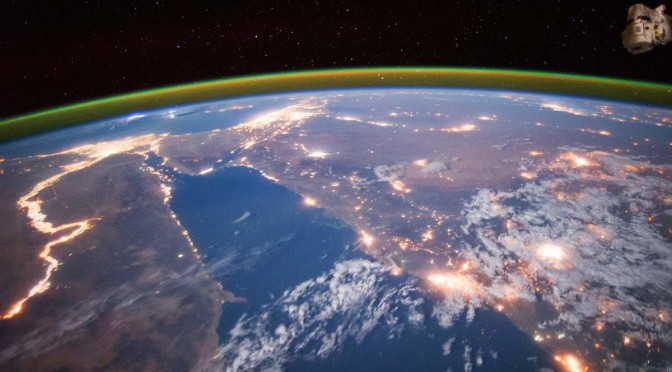
Even we could remove the effects of the moonlight, starlight and diffused sunlight from the far side, the Earth’s night sky would never be totally dark. This phenomenon is known as Airglow (also called nightglow). Airglow is a faint emission of light by Earth’s atmosphere (or any planetary atmosphere).

Categories
Earth from Space Space Exploration

Amazing Moon-Earth Photo by the Amateurs using a Chinese Satellite